


To assess property value accurately, you’ll need more than an online estimate or a single opinion. Start by defining your valuation goal, then combine recent comparable sales, inventory levels, pricing trends, and neighborhood developments with insights from experienced local agents. Their knowledge can clarify buyer demand and property-specific advantages that raw data may miss. By reconciling both sources and testing your estimate against current buyer behavior, you’ll uncover the factors that could shift your property’s true market value.
Key Takeaways
- Define the valuation’s purpose, intended users, required accuracy, and the most suitable valuation methodology.
- Analyze verified, recent sales of comparable properties, emphasizing location, size, condition, features, concessions, and closing dates.
- Adjust comparable sale prices for differences in renovations, views, development potential, zoning, layout, and buyer preferences.
- Evaluate local trends, including inventory, days on market, sale-to-list ratios, mortgage rates, employment, and infrastructure changes.
- Compare agent recommendations with market evidence and buyer behavior, including showing activity, objections, offer strength, and selling speed.
Define the Property’s Valuation Goal

Before you estimate a property’s value, define why the valuation is needed, because the purpose determines the appropriate method, data, and level of accuracy.
If you’re preparing to sell, you need a market-supported price that attracts qualified buyers without sacrificing equity. For refinancing, your lender may require a formal Property appraisal based on stricter standards.
Estate planning, taxation, insurance, divorce, or investment analysis can each call for a different valuation date, assumption, and reporting format. Clarify who’ll use the result, what decision it must support, and how precise it needs to be.
Then choose a valuation methodology that fits the property type and objective. A local agent can help you distinguish an indicative pricing opinion from a defensible professional valuation, keeping your conclusion aligned with its intended use.
Gather Reliable Property Market Data
Gather reliable property data by comparing recent sales of similar homes in the same area.
Analyze local trends, including pricing, demand, and inventory, so you’ll recognize the market forces shaping value.
Confirm each source to ensure your valuation reflects accurate, current conditions.
Compare Recent Sales
How much is your property really worth? Compare it with recently sold homes, not just current listings. Choose properties similar in location, size, condition, age, and design, then adjust for meaningful differences.
A local agent can provide verified sale prices, closing dates, concessions, and marketing conditions that public websites may omit.
Check whether each comparable shares your property’s zoning, since permitted uses and development potential can considerably affect value.
Also consider historical significance: a protected façade or heritage designation may increase appeal, while renovation limits could reduce buyer demand.
Give the greatest weight to the closest, most recent matches, and avoid relying on one sale.
Your agent can create a comparable-sales range, explain each adjustment, and help you identify a defensible market value before you set a price.
Analyze Local Trends
Recent sales show what buyers paid for individual homes, while local market trends explain where values are heading. To analyze those trends, track price changes, inventory, days on market, and buyer competition across several months.
Compare your property’s segment, such as starter homes, luxury houses, or condominiums, rather than relying on broad city averages.
Examine whether employers, schools, transit improvements, or new construction are attracting demand.
In a Historical neighborhood, preservation efforts and changing buyer preferences can influence appreciation differently from nearby areas.
Review Zoning regulations, too, because permitted density, redevelopment potential, and restrictions on additions can materially affect land value.
Watch seasonal patterns and identify whether recent movement reflects a lasting shift or a temporary spike.
You’ll produce a more defensible valuation when you connect neighborhood conditions to your property’s specific features.
Verify Market Sources
Before relying on a sale price or market statistic, verify its source, date, and relevance to your property. Reliable valuation starts with evidence you can trace, not an attractive figure from an unverified listing or social media post.
Ask your agent to compare:
- Recent closed sales, not asking prices, for similar homes.
- Official records and reputable databases that document transaction details.
- Historical data showing seasonal patterns, appreciation, and changing buyer demand.
- Local conditions, including Neighborhood safety, zoning, development, and access to services.
Check whether each comparable matches your property’s location, size, condition, and features. Confirm that renovations, concessions, or unusual circumstances didn’t distort the reported price.
Your agent can reconcile differences across sources and explain limitations. By validating every input, you’ll build a defensible market range and avoid overpricing or undervaluing your home.
Choose Comparable Properties Carefully
Choosing comparable properties carefully gives you a more reliable basis for estimating value. Start with homes in the same neighborhood, because location affects demand, access, school zones, and buyer expectations.
Match the property type, lot size, age, construction quality, bedroom count, and overall condition as closely as possible. An experienced local agent can help you identify meaningful similarities that automated searches may miss.
Exclude listings with unusual features, major defects, extensive renovations, or significant differences in views and amenities.
Check property records and listing details for Historical inaccuracies, such as incorrect square footage or outdated improvement descriptions.
Also review Legal considerations, including zoning, easements, permits, and ownership restrictions, since they can affect comparability and value.
Document why each property belongs in your comparison set.
Analyze Recent Sales and Pricing Trends
Track the latest closed sales to see what buyers have actually paid, rather than relying on asking prices or outdated assessments. Compare transactions from the past three to six months, adjusting for condition, size, renovations, lot features, and location. Then study the direction and pace of price changes.
- Calculate the median sale price to limit the impact of unusually high or low transactions.
- Compare price per square foot across similar homes, not as a standalone valuation.
- Note days on market, sale-to-list ratios, and concessions to understand negotiating conditions.
- Separate results by property type, neighborhood, and price band through Market segmentation.
Use these patterns to test realistic Pricing strategies and refine your value range. If prices are accelerating, weight newer sales more heavily; if they’re declining, avoid anchoring your estimate to older, stronger comparables. Document every adjustment for accuracy.
Use Agent Insights on Local Demand
Because local demand can vary sharply by neighborhood, use experienced agents’ insight to interpret what the sales data doesn’t show. Ask agents which buyer groups are actively searching, how quickly comparable homes attract offers, and whether listing activity reflects genuine interest or speculative noise.
Your Agent network can reveal shifts before they appear in published statistics, including rising inquiries, repeated showings, or fewer qualified buyers. Compare these observations with recent sales and pricing trends to test whether momentum supports your valuation or signals caution.
Pay attention to demand fluctuations caused by employment changes, seasonal moves, financing conditions, or buyer sentiment. Seek consistent feedback from multiple local professionals rather than relying on one opinion.
When agent reports align with market data, you can price with greater confidence; when they conflict, investigate the gap before finalizing your estimate.
Adjust for Location and Property Features
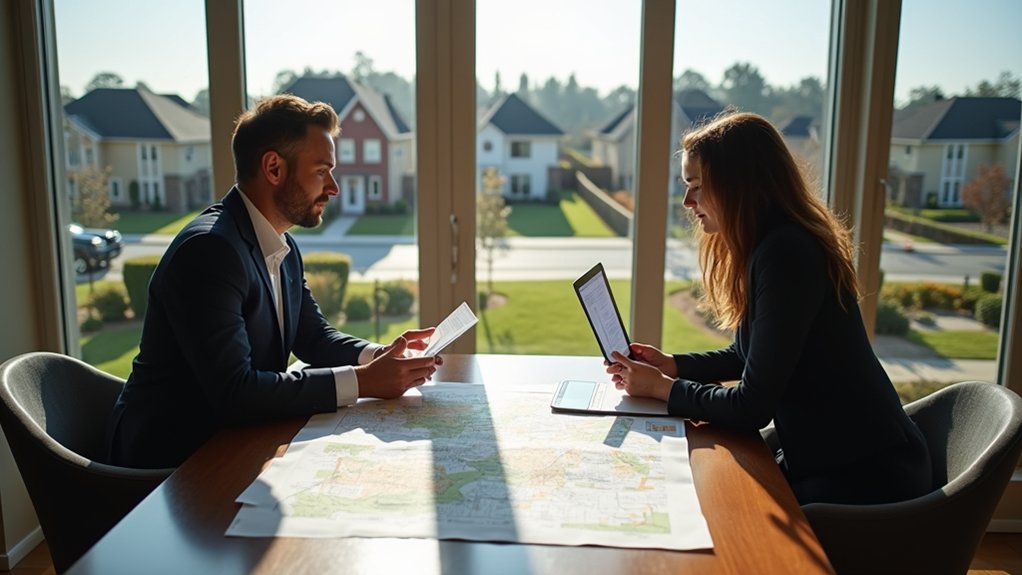
You’ll improve valuation accuracy by weighing how the neighborhood’s location, schools, amenities, and market demand influence buyer interest.
Compare each property’s features—such as size, condition, upgrades, layout, and outdoor space—with those of recent comparable sales. These adjustments help you reflect the differences that local buyers actually value.
Evaluate Neighborhood Influence
Neighborhood influence can shift a property’s value considerably, even when nearby homes share similar sizes and features. To measure that influence, study how buyers respond to the area, not just its listings. Review:
- Community amenities: Parks, schools, transit, shopping, and healthcare can strengthen demand and support higher prices.
- Access: Shorter commutes, reliable roads, and convenient services often create measurable premiums.
- Market activity: Compare days on market, sale-to-list ratios, and price trends with nearby neighborhoods.
- Zoning regulations: Planned development, density limits, and permitted uses may protect value—or signal future competition and disruption.
Use agent insights to identify which benefits buyers mention repeatedly. Then verify those impressions with recent comparable sales and localized market data.
Adjust your valuation for neighborhood desirability, development risk, and buyer demand rather than applying a broad area average.
Compare Property Features
Once neighborhood demand is established, compare properties by separating location effects from the features buyers are actually paying for. Select recent, nearby sales with similar lot sizes, building ages, and usable square footage.
Then adjust for differences such as bedrooms, bathrooms, garages, outdoor space, renovations, energy efficiency, and views. Don’t treat every upgrade equally: verify which improvements local buyers reward through comparable sales and agent feedback.
Property aesthetics, including curb appeal and interior finish, can influence offer strength, but quantify their impact conservatively.
Check zoning regulations, permitted uses, setbacks, and development potential, since these factors may materially change value.
Separate condition adjustments from location adjustments so you don’t double-count advantages.
Finally, document each adjustment, support it with market evidence, and reconcile the results into a realistic price range.
Account for Market and Economic Conditions
Market and economic conditions can considerably influence a property’s value, even when the home itself hasn’t changed. To estimate value accurately, you’ll need to study local trends alongside broader signals. Market fluctuations may shift buyer demand, competition, and achievable prices within weeks.
- Track recent comparable sales, noting whether prices are rising, leveling, or declining.
- Review inventory, days on market, and listing-to-sale ratios in your neighborhood.
- Monitor Economic indicators, including mortgage rates, employment, inflation, and wage growth.
- Consider seasonal patterns and major local changes, such as new employers, transit projects, or zoning updates.
Use current data rather than relying on an older appraisal or a single headline. A nearby market may behave differently from the wider region, so focus on the streets and buyer segments that most closely match your property. This approach helps you recognize changing conditions before they distort your valuation.
Reconcile Data With an Agent’s Valuation

Current market data gives you a stronger basis for evaluating an agent’s valuation. Compare the recommended price with recent sales of similar properties, adjusting for location, condition, size, upgrades, and lot characteristics. Ask the agent to explain each adjustment and identify the evidence supporting it.
Historical data can reveal whether the valuation reflects a lasting neighborhood trend or merely a short-term spike. Review local inventory, sale-to-list ratios, and price-per-square-foot figures, but avoid treating any single metric as conclusive.
You should also verify how Zoning regulations, planned infrastructure, tax changes, or development restrictions affect the property’s income potential and resale value.
If the agent’s estimate differs substantially from your analysis, request a revised comparison set or an independent appraisal. Reconcile the reasoning, not just the final number, before deciding.
Test the Estimate Against Buyer Behavior
Buyer behavior can help confirm whether an estimated value reflects what purchasers are actually willing to pay. Compare your estimate with real market signals, not assumptions about buyer psychology or pricing psychology.
- Review showing activity: Few visits may indicate that your price exceeds local expectations, while steady traffic supports stronger demand.
- Track offer quality: Multiple offers, quick decisions, and limited contingencies can validate a competitive valuation.
- Study buyer objections: Repeated concerns about condition, layout, or location may reveal a value gap your data missed.
- Measure market response: If similar homes sell faster or attract stronger bids, adjust for their advantages rather than relying on averages.
Ask your agent to interpret these patterns alongside recent comparable sales. You’ll improve valuation accuracy by testing numbers against actual decisions, negotiation behavior, and the specific priorities shaping demand in your neighborhood.
Frequently Asked Questions
How Often Should a Property Valuation Be Updated?
Update your property valuation annually, or sooner when Property trends shift, you renovate, refinance, or plan to sell. Local agents can reassess conditions and improve valuation accuracy with current comparable sales and demand data.
What Documents Are Needed for a Professional Property Valuation?
You’ll need your title deed, floor plans, recent improvements’ receipts, rates notice, lease details, and comparable sales; these support local Property valuation methods and improve valuation accuracy, even when your property seems straightforward to assess.
Can Homeowners Challenge or Appeal an Official Property Valuation?
Yes, you can challenge an official valuation. Start the Appeal process by reviewing comparable local sales, gathering supporting documents, and submitting valuation challenges before deadlines. Request an independent review if errors remain, improving valuation accuracy.
How Much Does Hiring a Property Valuer Typically Cost?
You’ll typically pay $300–$800 for a residential valuation; complex properties cost more. Like checking a compass before sailing, you’ll need accurate valuation techniques to navigate market fluctuations, with local expertise improving confidence and accuracy.
Does a Property Valuation Affect Mortgage Approval or Refinancing?
Yes, your property valuation can affect mortgage approval or refinancing. Lenders compare it with your loan, applying current property market trends and valuation methods to assess risk, borrowing limits, interest rates, and valuation accuracy.
Conclusion
To assess property value accurately, combine current market data with an experienced local agent’s perspective. Review relevant comparables, recent sales, inventory, buyer demand, and neighborhood changes, then adjust for your property’s condition, location, and features. Reconcile your estimate with agent feedback and test it against likely buyer behavior. When you blend evidence and expertise like a well-calibrated compass, you’ll set a realistic value that reflects today’s market and supports confident decisions.