


Mayfair isn’t exactly an overlooked corner of London’s property market. You’ll find global prestige, constrained supply, and resilient demand from ultra-high-net-worth buyers supporting long-term capital preservation. Luxury apartments, discreet mews houses, and turnkey residences can attract both international purchasers and premium tenants, though stamp duty, financing costs, regulation, and limited yields can narrow returns. The key question is whether Mayfair’s scarcity justifies its entry price—and which properties offer genuine value.
Key Takeaways
- Mayfair offers strong long-term capital preservation through global prestige, limited supply, and consistent international demand.
- Prime addresses near Bond Street, Berkeley Square, and Grosvenor Square typically provide superior pricing resilience and resale appeal.
- Luxury apartments, townhouses, and turnkey residences can attract premium rents, particularly when offering privacy, security, concierge services, or outdoor space.
- Returns may be reduced by high acquisition taxes, service charges, maintenance costs, financing expenses, and potentially extended selling periods.
- Thorough due diligence should assess comparable transactions, achieved rents, lease terms, building condition, planned works, regulations, and stress-tested financing.
Is Mayfair a Good Investment for Luxury Property?

Yes—Mayfair remains one of London’s strongest luxury-property investment locations, particularly for buyers prioritising long-term capital preservation, global appeal, and scarce supply. You’ll find a resilient market supported by tightly controlled development, exceptionally limited stock, and sustained demand for prime central addresses.
However, you shouldn’t treat every property as equally investable. Your returns will depend on entry price, tenure, floorplan, condition, and the quality of refurbishment. Homes offering discreet service, private outdoor space, secure parking, and other Luxury amenities typically command stronger buyer and tenant interest.
You’ll also need to assess Architectural styles: restored Georgian townhouses, period conversions, and contemporary apartments appeal to different audiences and carry distinct maintenance profiles. Focus on liquidity, realistic rental assumptions, service charges, and exit demand before committing capital.
A specialist valuation remains essential.
What Makes Mayfair Attractive to Global Investors?
You’ll find Mayfair’s global prestige anchored by its heritage, luxury retail, elite hospitality, and proximity to London’s financial and cultural institutions.
That international profile supports resilient demand from high-net-worth buyers, while constrained supply can strengthen long-term pricing potential.
Next, assess how these factors translate into investment performance and portfolio diversification.
Global Prestige
Mayfair’s global prestige rests on a rare combination of London’s political and cultural influence, internationally recognised brands, and tightly constrained prime residential supply. For you, that creates a neighbourhood with exceptional visibility among international buyers, family offices, and globally mobile executives.
Art galleries, luxury retailers, Michelin-starred restaurants, and historic landmarks reinforce Mayfair’s distinctive identity, while embassies, auction houses, and established institutions add credibility beyond its residential offer.
Its central position places you within easy reach of Hyde Park, the West End, St James’s, and the City, strengthening its appeal for both lifestyle and business access.
Significantly, Mayfair communicates status instantly across markets: a recognised address can simplify purchasing decisions when you’re buying remotely.
This reputational depth supports resilient demand, without relying on speculative narratives or short-term market sentiment.
Strong Investment Potential
While no prime market is immune to cycles, Mayfair offers global investors a compelling balance of capital preservation, international demand, and long-term rental appeal. You’ll benefit from constrained supply, exceptional connectivity, and enduring buyer interest from family offices, entrepreneurs, and international executives.
Prime values can fluctuate, yet scarcity supports liquidity better than in less established districts, particularly for well-positioned freeholds and turnkey residences.
Market trends increasingly favour properties combining privacy, energy efficiency, concierge services, and flexible living space. Luxury amenities can strengthen rental pricing and broaden your prospective tenant pool, although you should scrutinise service charges, lease terms, and refurbishment costs before committing.
Mayfair’s appeal also extends beyond yield: sterling movements, wealth diversification, and London’s legal and cultural infrastructure can enhance its strategic role within a global portfolio.
You’ll still need disciplined underwriting, realistic exit assumptions, and professional advice.
Which Mayfair Properties Offer the Best Potential?

You’ll find the strongest potential in prime Mayfair locations, where sustained international demand and limited supply support pricing resilience.
Focus on luxury apartments, period townhouses, and turnkey residences, comparing rental yields, service charges, and resale liquidity.
Your strategy should balance prestige with fundamentals, prioritising properties that combine exceptional addresses, quality specification, and long-term scarcity.
Prime Mayfair Locations
If you’re evaluating Mayfair property for investment potential, focus on micro-locations rather than the district’s reputation alone. Bond Street and New Bond Street typically command exceptional values, supported by luxury retail, global brands, and consistently strong visitor demand.
Berkeley Square offers a quieter, prestigious setting, while properties near Grosvenor Square may benefit from long-term regeneration and improved public-realm investment.
South Mayfair, including Mount Street, attracts affluent shoppers through distinctive boutiques, Street fashion, and local art, strengthening its lifestyle appeal and rental resilience.
You should compare each address by walking access, frontage quality, transport connectivity, noise exposure, and conservation constraints.
Analyse achieved prices, not asking prices, and benchmark service charges, lease terms, and liquidity against nearby transactions.
The strongest location combines enduring prestige with measurable demand drivers and limited competing supply.
Luxury Property Types
Once you’ve identified the right Mayfair micro-location, the property type becomes the next determinant of investment performance. Luxury penthouses can deliver exceptional capital appreciation when they combine protected views, terraces, lift access, and discreet concierge services. Their scarcity supports pricing power, although service charges, lease terms, and buyer-pool depth require careful underwriting.
Historic townhouses offer a different proposition: larger floorplates, architectural character, and potential for repositioning through sensitive refurbishment. You’ll need to assess listed-building constraints, conservation requirements, and conversion costs before projecting returns.
Well-configured houses can attract international families, embassies, or boutique offices, creating multiple exit routes. For rental income, turnkey apartments typically provide stronger liquidity, while trophy residences may outperform over a longer horizon.
Compare net yields, resale evidence, and anticipated maintenance rather than relying on headline prices alone.
How Do Mayfair Prices Compare With Other Prime Areas?
How does Mayfair compare with other prime London markets? You’ll typically pay a premium for its central location, international profile and limited supply.
Recent market trends place top Mayfair homes among London’s highest values, often competing with Knightsbridge and Belgravia, while exceeding many addresses in Chelsea, Kensington and St John’s Wood. Price comparisons depend heavily on tenure, condition, floor area and proximity to Hyde Park or Bond Street.
A turnkey apartment in a landmark development can command more than an older, larger flat requiring refurbishment elsewhere, so headline averages can mislead. You should assess comparable transactions, not asking prices, and distinguish trophy assets from wider neighbourhood stock.
Mayfair’s pricing also reflects scarcity: development opportunities remain constrained, supporting resilience, although premiums leave less room for error when negotiating and forecasting capital growth.
Can Mayfair Deliver Strong Rental Demand?
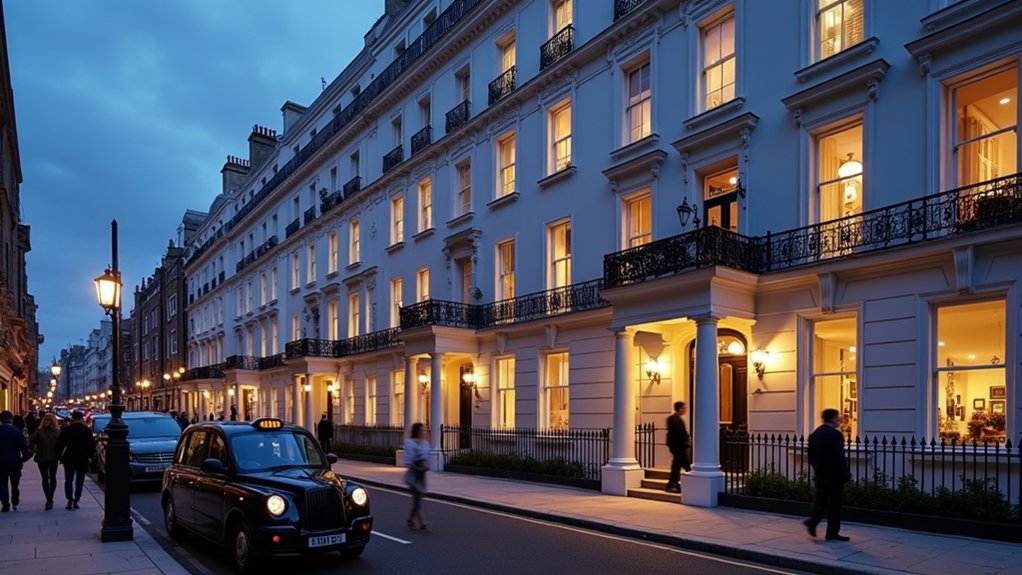
Mayfair can deliver strong rental demand, particularly for well-furnished, professionally managed homes suited to international executives, finance professionals and corporate relocations. You’ll benefit from the area’s concentration of global businesses, embassies, restaurants and cultural destinations, which supports a deep, internationally mobile tenant pool.
Demand typically favours one- to three-bedroom apartments offering security, discreet service, flexible furnishing and luxury amenities such as gyms, concierge desks and private terraces. To assess resilience, track Market trends including corporate hiring, relocation volumes, prime London leasing activity and tenant preferences for turnkey accommodation.
Well-presented properties near transport links and established retail streets can attract enquiries faster than undifferentiated stock. You should also compare achieved rents, not just asking prices, across comparable buildings, then position your property around service quality, privacy and convenience to protect occupancy.
What Costs Reduce Mayfair Investment Returns?
Strong rental demand doesn’t automatically translate into strong net returns. You’ll need to model every expense against Mayfair’s premium purchase prices and achievable rent. Stamp duty, legal fees, mortgage interest, and acquisition charges can materially dilute your initial yield.
Ongoing management fees, insurance, service charges, utilities between tenancies, and maintenance costs further reduce distributable income, particularly in period conversions or heavily serviced buildings.
You should also assess the tax implications carefully. Income tax, corporation tax, and restrictions on interest deductibility may lower your after-tax cash flow, while capital gains tax can affect your eventual exit proceeds.
Use conservative assumptions for void periods and rent collection, then stress-test returns at different financing rates. A property that appears attractive on gross yield may produce modest net returns once operating, financing, and tax costs are fully reflected.
Which Risks Should Mayfair Investors Consider?
Although Mayfair has a resilient prime-market profile, investors still face material risks from pricing, liquidity, regulation, and property-specific costs.
Market volatility can widen the gap between asking prices and achieved values, particularly when interest rates rise or international demand weakens. You may also face extended selling periods because luxury property attracts a narrower buyer pool, making liquidity less predictable than in mainstream markets.
Regulatory challenges remain significant: changes to stamp duty, non-resident taxation, planning rules, energy standards, or anti-money-laundering requirements can reduce net returns and increase transaction friction.
Currency movements may amplify gains or losses for overseas investors. Building defects, lease restrictions, service-charge inflation, and costly refurbishment can further erode yields.
Stress-test financing, occupancy, exit values, and tax assumptions before committing capital, and review them regularly as market conditions change.
How Can You Choose the Right Mayfair Property?
After stress-testing market, regulatory, and property-specific risks, you should assess each Mayfair opportunity against its income potential, resale appeal, and total ownership cost. Compare achieved rents, service charges, lease terms, and recent comparable sales—not optimistic asking prices.
Then examine the building’s condition, planned works, energy performance, and financing implications. Historical architecture can support scarcity value and long-term desirability, but listed-building constraints may increase renovation costs and limit alterations.
Map local amenities within a walkable radius, including restaurants, galleries, transport links, and green spaces, while testing noise, traffic, and privacy at different times.
Prioritise layouts that suit likely tenants or buyers, with efficient space, strong natural light, and adaptable rooms.
Finally, commission an independent survey and valuation before negotiating, ensuring your offer reflects evidence rather than Mayfair’s prestige alone.
Who Should Invest in Mayfair High-End Property?
Mayfair high-end property generally suits investors with substantial capital, a long time horizon, and the capacity to absorb lower yields, high transaction costs, and occasional vacancy in exchange for prime-location scarcity and potential capital preservation.
You’re likely a strong candidate if you prioritize wealth preservation, portfolio diversification, and sterling-denominated assets over immediate income.
Mayfair’s local amenities, global connectivity, and historical significance support enduring occupier and buyer demand, but they don’t eliminate market risk.
You should assess net yields after financing, service charges, taxes, and management costs, then stress-test values against interest-rate rises and weaker liquidity.
International buyers may value currency diversification and a prestigious base, while owner-occupiers can justify a lifestyle premium.
If you need high cash flow, short-term gains, or minimal capital, another market may suit you better.
Frequently Asked Questions
What Types of Ownership Structures Are Available for Mayfair Property Investors?
You can choose freehold, leasehold, joint ownership, limited-company ownership, partnership, trust, or fund structures. Compare Ownership options carefully, because tax treatment, financing access, control, privacy, and exit flexibility create distinct Investment implications for Mayfair investors.
How Long Does a Typical Mayfair Property Purchase Take to Complete?
You’ll typically complete a Mayfair purchase within 8–12 weeks—faster than lightning when finances align. Luxury amenities can extend due diligence, while Market trends affect negotiations; your solicitor should coordinate surveys, searches, financing, and exchange efficiently.
Are There Restrictions on Renovating Listed Buildings in Mayfair?
Yes, you’ll face strict Renovation regulations for listed buildings in Mayfair. Historic preservation controls affect structural changes, façades, interiors, and materials; secure listed-building consent, planning approval, and specialist advice before budgeting or commissioning works.
What Due Diligence Should Buyers Conduct Before Exchanging Contracts?
Before exchanging contracts, you should verify title, planning permissions, listed-building consents, surveys, lease terms, service charges, and liabilities. Analyse Market trends, calculate Property tax, confirm financing, and negotiate protections for undisclosed defects or restrictions.
How Can Investors Finance a High-End Mayfair Property Purchase?
Compare rates, assess leverage, and stress-test repayments: you can combine private-bank mortgages, Lombard lending, or equity. Match borrowing to Market trends, scrutinise Luxury amenities, and preserve liquidity for taxes, refurbishment, and unexpected costs.
Conclusion
Mayfair can make a compelling high-end investment if you value prestige, protection, and patient growth. Limited supply, global demand, and resilient pricing support long-term capital preservation, while luxury rentals can strengthen cash flow. However, stamp duty, service charges, financing costs, taxes, and regulation can materially reduce returns. You’ll need disciplined due diligence, realistic yield modelling, and specialist advice. Choose a property with prime positioning, enduring appeal, and practical rental potential—not merely a famous postcode.