


Your patio or paving can last for decades when you maintain it before small problems become costly repairs. Sweep it weekly, clean it thoroughly each season, remove weeds, and refill worn joints to keep surfaces stable. Repair cracks and loose pavers promptly, then apply a suitable sealer to guard against rain, frost, stains, and organic growth. Good drainage and careful cleaning matter too—but some common maintenance habits can cause more harm than good.
Key Takeaways
- Sweep patios and paving weekly to remove grit, leaves, and organic debris that can cause scratches, staining, and surface deterioration.
- Control weeds promptly, clear joints, and replenish missing jointing sand to prevent plants from lifting or destabilising paving.
- Repair cracks, gaps, loose pavers, and damaged joints during dry weather before minor defects become costly structural problems.
- Clean spills quickly, maintain clear drains, and use tested patio-safe products to prevent persistent stains and water damage.
- Apply a suitable sealer to clean, dry surfaces in moderate weather, following manufacturer instructions and inspecting protection annually.
Clean Patios and Paving Regularly

Regular cleaning prevents dirt, algae, moss, and leaf stains from becoming embedded in patio and paving surfaces. Sweep your patio weekly, especially after windy weather, to remove grit before it scratches or settles into joints.
Schedule seasonal cleaning in spring and autumn, when mild temperatures help surfaces dry properly.
After heavy rain, clear standing water and rinse away organic residue before it becomes slippery.
For DIY maintenance, use a stiff broom, clean water, and a suitable patio cleaner; test any product on an inconspicuous area first. Follow the manufacturer’s dilution instructions, and avoid mixing chemicals.
A pressure washer can speed up cleaning, but keep the nozzle moving and use moderate pressure to protect surfaces and mortar joints.
Clean on a dry, calm day, then allow the paving to dry fully before use.
Remove Weeds and Prevent Their Return
Once the patio is clean and dry, remove weeds before they spread through joints or lift paving. Pull young growth by hand after light rain, when roots release more easily.
For established weeds, use a patio-safe treatment according to the label, and choose a calm, dry day so spray won’t drift or wash away. Avoid salt and harsh homemade remedies, which can damage paving, nearby plants, and soil.
Brush out seeds and loose debris regularly, particularly after windy weather, then sweep jointing sand back into empty spaces. Improve weed control by checking shaded, damp areas more often, since they encourage germination.
If you add containers or borders, consider plant selection carefully: choose tidy, non-invasive varieties and keep them from spilling into joints. Remove fallen leaves promptly to limit moisture and seed buildup.
Repair Cracks, Gaps, and Loose Pavers
Repair cracks, gaps, and loose pavers as soon as you spot them, ideally during a dry spell when surfaces and joints can dry thoroughly. Clear dirt, weeds, and debris from damaged areas, then check whether water has softened the base. Lift loose pavers, add and compact fresh bedding material, and reset them level with surrounding paving.
Replace broken units through careful paver replacement, matching the existing size, colour, and pattern. For widening joints, remove unstable material to a consistent depth before joint regrouting with the correct sand or compound.
Don’t work during rain, frost, or extreme heat, as moisture and temperature changes can prevent proper setting. After repairs, keep foot traffic and furniture away until the materials have fully stabilised.
Recheck repaired areas after heavy rainfall.
Seal Patios and Paving for Protection
Sealing patios and paving helps limit water penetration, staining, weed growth, and weather-related damage. Before you begin, check the forecast for two dry days with moderate temperatures. Sweep away debris, remove organic growth, and let the surface dry completely.
Replace damaged jointing material and allow fresh repairs to cure before applying any product.
Choose a sealer designed for your paving material and follow the manufacturer’s coverage and preparation instructions. Surface sealing works best on clean, sound paving, while breathable formulations suit porous stone and older slabs.
Apply thin, even coats with a roller, brush, or sprayer, and keep edges neat. Don’t seal damp areas or trap moisture beneath the coating.
Seal coating may need periodic renewal, so inspect the finish each spring and reapply when it starts wearing thin.
Prevent Stains and Weather Damage
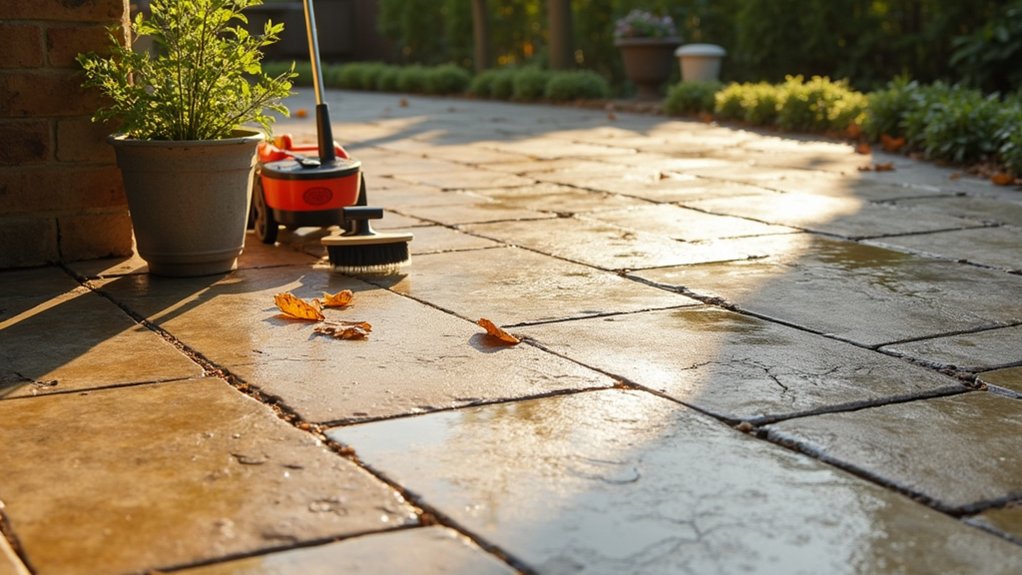
Prevent stains and weather damage by dealing with spills, leaf debris, and standing water promptly. Blot oils, drinks, and mud before they soak into porous paving, then rinse with clean water. For stubborn marks, choose Stain removal products suited to your surface, and test them in an inconspicuous area first. Don’t use harsh acids or abrasive tools that can strip sealers or scratch slabs.
Sweep regularly to prevent organic debris from leaving dark patches, and keep joints and drains clear so rainwater can escape. Before winter, repair cracks and replace damaged joints; trapped moisture can freeze, expand, and worsen defects.
Apply Weatherproof coatings according to the manufacturer’s instructions, particularly before wet or frosty weather. Recoat when water stops beading, and inspect your patio after storms, heatwaves, and prolonged damp conditions.
Frequently Asked Questions
How Often Should Patios and Paving Be Professionally Inspected?
You should have patios and paving professionally inspected annually, ideally before severe weather. Ask experts to assess drainage, cracks, joint stability, sealing techniques, and weed control, then address minor damage before freeze-thaw cycles worsen problems.
Which Materials Are Best Suited for High-Traffic Patio Areas?
You’ll find porcelain pavers, concrete, and natural stone best for busy patios, offering excellent Material durability. Choose textured, frost-resistant surfaces; regular Surface maintenance helps withstand rain, heat, stains, and winter wear without losing their welcoming character.
Can Patio Furniture Damage Paving, and How Can This Be Prevented?
Yes, Outdoor furniture can scratch, stain, or crack paving. You’ll prevent damage with paving protection pads, level feet, regular repositioning, and weather-resistant covers. Remove standing water and secure furniture before strong winds or storms.
What Drainage Solutions Help Prevent Water Pooling Around Patios?
Install drainage systems, such as a French drain beside your patio, to redirect water runoff. You’ll prevent pooling by grading surfaces away from paving, clearing channels, and checking outlets after heavy rain or freezing weather.
When Should Damaged Paving Be Replaced Instead of Repaired?
Replace paving when cracks spread, slabs shift, drainage fails, or repairs repeatedly break down. Consider your Paving lifespan and Repair versus replacement costs, especially after frost, flooding, or prolonged weather exposure, before choosing durable, well-drained materials.
Conclusion
Maintain your patio and paving now, and they’ll serve you for years. Sweep weekly, clean seasonally, remove weeds, and refill joints before small gaps become costly failures. Repair cracks and loose pavers promptly, then seal sound, dry surfaces against rain, frost, stains, and organic growth. Keep drainage clear, treat spills quickly, and avoid harsh pressure washing. Like a stitch in time, consistent care prevents bigger damage—whatever the weather brings.