


Your garden works like a quiet shield, protecting your home’s exterior through every season. In spring, clear debris, test your soil, and prune dormant plants for healthier growth. Summer calls for pest checks, careful watering, and mulch kept away from siding. In fall, remove leaves, trim risky branches, and maintain drainage. Before winter arrives, clean gutters and protect tender plants—because one overlooked task can lead to costly damage.
Key Takeaways
- Remove leaves, dead plants, and debris promptly to reduce pests, disease, moisture damage, and foundation-related problems.
- Keep mulch, soil, vines, and branches several inches away from siding, windows, gutters, and exterior walls.
- Maintain gutters and downspouts, directing water several feet away from the foundation to prevent drainage and moisture issues.
- Inspect and repair trellises, raised beds, decks, edging, and outdoor surfaces before seasonal weather worsens damage.
- Water, prune, and protect plants appropriately while maintaining clear access around vents, meters, faucets, and heat pumps.
Prepare Your Garden for Spring Growth
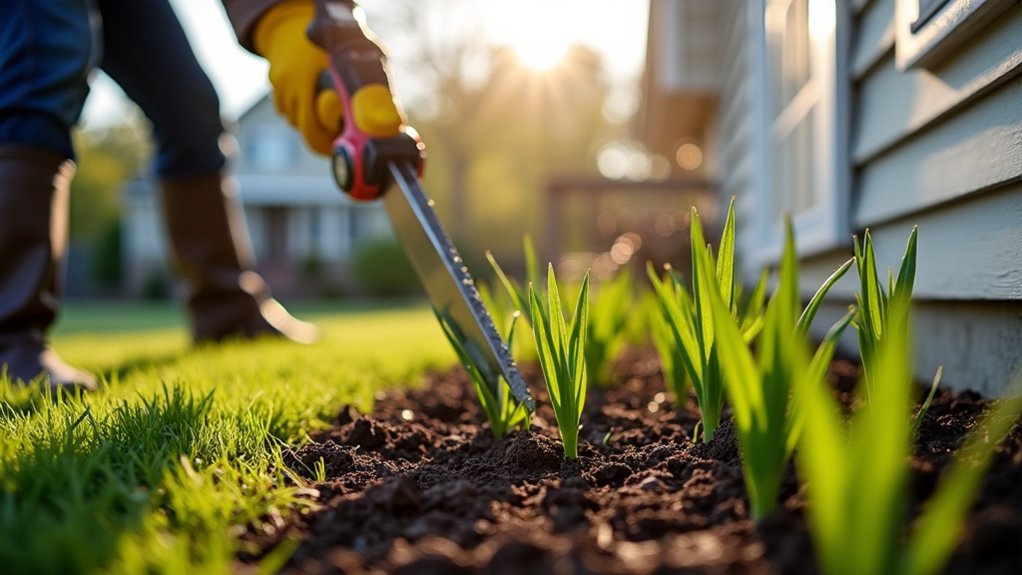
As winter fades, prepare your garden for spring by clearing away fallen leaves, dead stems, and other debris that may harbor pests or disease.
In coastal or inland climates, remove material from beds, pathways, and areas beside your home’s foundation, then dispose of diseased plants rather than composting them.
Test your garden soil before adding compost or fertilizer; adjust pH and nutrients according to local extension recommendations.
Loosen compacted soil gently, taking care not to disturb emerging bulbs or shallow roots.
Complete flower pruning on dormant shrubs and perennials, cutting damaged growth back to healthy tissue with clean, sharp tools.
Inspect trellises, edging, and raised-bed frames for rot or loose hardware, and repair them before vigorous growth begins.
Finally, refresh mulch after the soil warms, keeping it several inches away from stems and siding.
Maintain Summer Plants and Outdoor Surfaces
Once spring repairs and planting are complete, shift your focus to summer care for both plants and outdoor surfaces. In hot, humid regions, follow a consistent watering schedule, soaking roots early in the morning to reduce evaporation and fungal problems.
Check leaves weekly for insects, treating infestations promptly with targeted pest control that won’t harm pollinators. Mulch beds to conserve moisture, but keep it several inches from siding and foundation walls.
Sweep pollen, soil, and plant debris from patios, walkways, and porches before stains set. Rinse exterior surfaces with a garden hose, and use a soft brush on algae-prone areas.
Inspect wooden decks for fading, splinters, or standing water, then reseal them when conditions are dry. Keep vines and branches trimmed away from gutters, windows, and exterior walls throughout summer.
Protect Your Home During Fall Cleanup
When fall cleanup begins, protect your home by directing leaves and yard debris away from foundations, siding, vents, and drainage areas. In wet Pacific Northwest neighborhoods, decomposing piles can stain siding, block crawl-space vents, and create damp conditions near entry points.
Schedule leaf removal after windy days, then rake outward from walls before bagging or composting debris according to your municipality’s guidelines. Keep a clearance around heat pumps, outdoor faucets, and utility meters so technicians can work safely.
Trim fallen branches into manageable sections, but don’t drag them across decks, fences, or painted surfaces. For pest prevention, remove fruit, seed heads, and dense leaf piles where rodents and insects may shelter.
Wear gloves, eye protection, and sturdy shoes, and check equipment before use. Sweep pathways clean to prevent slips and tracked-in moisture.
Winterize Gardens, Gutters, and Soil
With fall debris cleared, prepare your gardens, gutters, and soil for Pacific Northwest winter rain. Clean gutters and downspouts, then confirm water flows away from your foundation. Extend downspouts several feet, and replace loose sections before storms expose weaknesses.
Cut back diseased perennials, remove fallen leaves from beds, and mulch with two to three inches of compost or bark. Keep mulch off siding and stems to discourage rot and rodents.
For Garden pest control, inspect plants for overwintering eggs, slugs, and fungal damage; remove affected material and avoid bringing pests indoors.
Test compacted beds after autumn traffic. Gentle soil aeration improves drainage without disrupting beneficial roots or mycorrhizae. Plant cover crops or add compost where soil erodes.
Protect tender shrubs with breathable fabric, and stake young trees against Pacific Northwest winds.
Frequently Asked Questions
How Often Should Garden Tools Be Cleaned and Disinfected?
Clean garden tools after every use, then disinfect them weekly during active seasons or after cutting diseased plants. Follow your tool maintenance schedule, dry equipment thoroughly, and organize garden tool storage to prevent rust and contamination.
What Plants Naturally Repel Pests Near Exterior Walls?
You can plant lavender, rosemary, mint, marigolds, and catmint near exterior walls; studies find native plants support more beneficial insects. Choose Native plants suited locally, maintain airflow, and improve pest resistance without attracting moisture-loving pests.
When Should You Replace Cracked or Damaged Outdoor Planters?
Replace cracked outdoor planters immediately, especially before freezing weather or heavy rain. Choose durable outdoor planter materials suited to your climate, and schedule seasonal planter replacement when damage threatens roots, drainage, stability, or nearby walls.
How Can You Prevent Pets From Damaging Newly Planted Garden Beds?
Prevent pets from damaging new beds with Pet proofing strategies: install Garden bed barriers, use sturdy edging, cover soil temporarily, and guide pets toward designated paths. Reward good behavior and inspect barriers regularly for gaps or weak spots.
Which Eco-Friendly Fertilizers Are Safest for Surrounding Home Foundations?
You’ll find Organic composting and well-aged manure safest near home foundations. First use Soil testing to match nutrients, avoid salty chemical fertilizers, keep applications light, and maintain drainage away from walls to prevent moisture damage.
Conclusion
With each season, give your garden and home’s exterior the attention they need. In spring, clear debris and prepare the soil; through summer, water wisely, manage pests, and keep mulch off siding. Fall’s cleanup should protect drainage and trim risky branches, while winterizing safeguards gutters, plants, and soil. Treat these tasks as your home’s year-round shield, and you’ll prevent costly damage, support healthier growth, and keep your landscape ready for changing local weather.


