
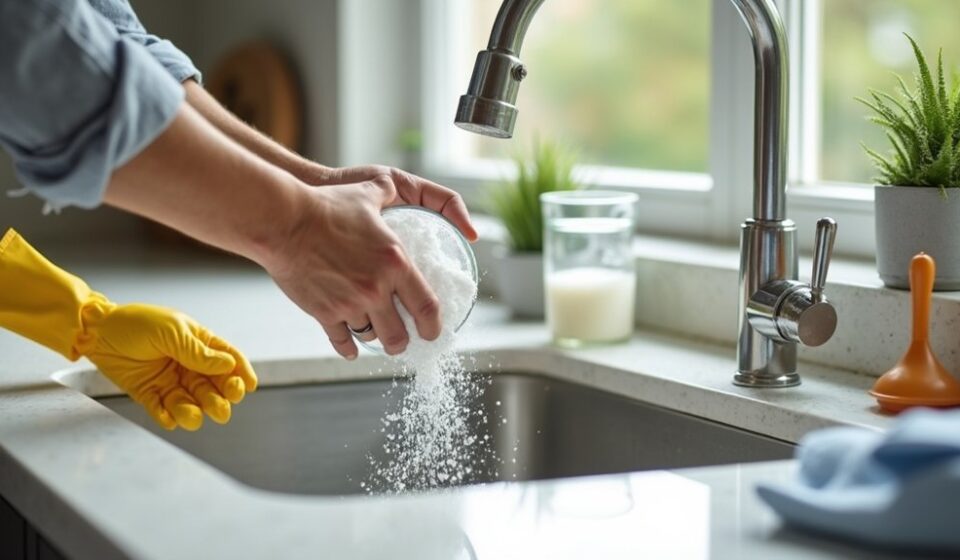

A slow or smelly drain can make your whole home seem unbearable, but you can often fix it with a few simple steps. Put on gloves and remove visible hair, soap scum, or debris without pushing it deeper. Next, use a plunger with enough water to cover the drain, then pump firmly several times. For odors, try baking soda followed by vinegar, cover the opening, and flush with hot water after 10–15 minutes. If the clog remains, know when a plumber’s help is necessary.
Key Takeaways
- Remove visible hair, soap scum, and debris using gloves, then clean the drain cover and surrounding area.
- Flush the drain with hot tap water for several minutes, avoiding boiling water in plastic pipes.
- Use the appropriate plunger, seal the overflow, and pump firmly 10–15 times to restore flow.
- For odors, add baking soda followed by white vinegar, cover briefly, then flush with hot water.
- Stop if water backs up, fumes develop, or multiple drains are affected, and contact a plumber.
Clear Surface Debris and Flush the Drain

Start by removing visible hair, soap scum, leaves, or other debris from the drain opening with gloved hands or a small tool. Wear waterproof gloves, and don’t push debris deeper into the pipe. Place removed material in the rubbish, not the sink.
For effective Surface cleaning, wipe the drain cover and surrounding area with hot, soapy water, then rinse away residue.
Next, flush the drain with a steady stream of hot tap water for several minutes. Use hot water, not boiling water, if your pipes are plastic or your manufacturer recommends caution.
This basic Drain maintenance clears loose residue and helps reduce odors.
Never mix chemical cleaners, and don’t add them if standing water suggests a serious blockage.
Stop if water backs up, leaks appear, or unpleasant fumes develop.
Unblock Slow Drains With a Plunger
If hot-water flushing doesn’t restore normal flow, use a plunger to loosen a partial blockage. Choose a cup plunger for sinks and a flange plunger for toilets. Remove the stopper, then add enough water to cover the cup.
Seal overflow openings with a damp cloth, position the plunger over the drain, and pump firmly 10–15 times without breaking the seal. Lift it sharply and check whether water drains freely. Repeat several cycles if necessary.
For safer plunger techniques, keep steady pressure rather than forcing the tool, which can damage connections. Don’t plunge after using chemical drain cleaner; splashes can burn your skin or eyes. Wear gloves and eye protection, and ventilate the area.
If plunging doesn’t improve flow, stop and call a professional. Regular drain maintenance, including strainers and prompt cleaning, helps prevent recurring blockages.
Use Baking Soda and Vinegar for Odors
Baking soda and vinegar can help neutralize drain odors and loosen light residue, but they won’t clear a serious blockage. Remove the stopper, then pour half a cup of baking soda into the drain. Add one cup of white vinegar, and cover the opening immediately with a plug or cloth.
The resulting chemical reactions create fizzing that helps lift grime near the surface. Wait 10 to 15 minutes, then flush the drain with a kettle of hot water. Don’t use boiling water in plastic pipes or on delicate fixtures; hot tap water is safer.
Never combine vinegar with bleach, drain cleaner, or other chemicals, because dangerous fumes or heat can result. This method has a low environmental impact, but use modest amounts and wipe away splashes promptly to protect finishes.
Know When to Stop and Call a Plumber
When plunging, snaking, or flushing the drain doesn’t restore normal flow, stop before you risk damaging the pipes and call a licensed plumber. Don’t force a tool, mix chemical cleaners, or keep adding treatments; pressure and corrosive products can worsen blockages, damage seals, or expose you to harmful fumes.
Seek a Professional assessment if multiple fixtures drain slowly, wastewater backs up, or foul odors return after cleaning. Treat these as Emergency signs: sewage entering your home, water spreading near electrical outlets, a burst or leaking pipe, or a complete loss of drainage.
Shut off the affected water supply when possible, keep people away from contaminated water, and ventilate the area. Tell the plumber what you tried, including any products used.
Prompt help can prevent structural damage, mold growth, and expensive repairs.
Frequently Asked Questions
Can Chemical Drain Cleaners Damage Pipes or Septic Systems?
Yes, chemical drain cleaners can damage pipes and septic systems. You’ll risk chemical hazards, pipe corrosion, bacterial disruption, and leaks. Choose mechanical methods first, and consult professionals before using products, especially with septic systems.
How Often Should Household Drains Be Professionally Inspected?
Schedule professional drain inspections annually; inspect, prevent, protect. Your Inspection frequency should increase for older plumbing, recurring backups, or tree-root problems. Professional Drain cleaning prevents damage, protects septic systems, and catches leaks before costly repairs occur.
Are Slow Drains a Sign of a Damaged or Collapsed Pipe?
Slow drains can indicate a damaged or collapsed pipe, but blockages remain more common. Watch for pipe corrosion, root intrusion, recurring backups, or multiple affected fixtures. Don’t excavate yourself; arrange professional camera inspection promptly.
Can Drain Covers Prevent Hair and Debris From Causing Blockages?
Yes, drain covers can prevent hair and debris from entering pipes. You’ll gain Drain cover benefits and improve Hair trap efficiency by choosing a snug, removable model and cleaning it regularly to prevent buildup and odors.
What Safety Precautions Should Renters Take Before Attempting Drain Repairs?
Like a cautious mechanic, you’ll protect yourself first: wear Personal protective equipment, guarantee Ventilation and airflow, avoid mixing cleaners, shut off water when necessary, photograph damage, and contact your landlord before invasive repairs.
Conclusion
With gloves and care, remove surface debris, plunge firmly, and try baking soda and vinegar for lingering odors. Don’t mix these remedies with chemical drain cleaners, and never force tools if resistance increases. A useful reminder: household drains can collect several ounces of hair and soap residue before flow noticeably slows, so regular cleaning prevents bigger blockages. If water still backs up, smells persist, or multiple drains are affected, stop experimenting and call a licensed plumber promptly.