


A healthy garden starts with a simple maintenance plan that matches your soil, plants, and local conditions. Mow your lawn at the right height, feed it according to soil-test results, and water deeply but infrequently. Keep borders weed-free, improve their soil with organic matter, and prune shrubs when their flowering cycle allows. Seasonal tasks such as aerating, mulching, and removing dead foliage also matter—and the order you tackle them can make all the difference.
Key Takeaways
- Mow regularly at the correct height, remove no more than one-third of grass growth, and keep mower blades sharp and balanced.
- Water deeply and infrequently in the morning, grouping plants by moisture needs and checking soil before irrigating.
- Prepare borders with well-improved soil, control weeds promptly, and apply 5–7 cm of mulch without covering plant stems.
- Prune shrubs according to flowering time, removing dead or crossing branches while preserving their natural shape and limiting cuts to one-third.
- Monitor plants regularly, feed and repair lawns seasonally, inspect for pests, and adjust maintenance to weather and plant performance.
Start With a Simple Garden Maintenance Plan

A simple garden maintenance plan keeps routine work manageable and plants healthy. Begin by surveying your garden layout, noting sun exposure, soil conditions, drainage, mature plant sizes, and areas that need frequent access.
Divide the property into manageable zones, then assign weekly, monthly, and seasonal tasks to each one. Check beds for weeds, spent flowers, damaged growth, and emerging problems during every visit. Record pruning dates, planting times, and observations so you can adjust care as conditions change.
Include irrigation checks, compost applications, mulching, and tool cleaning, but schedule each according to plant needs rather than habit. For effective pest management, inspect leaf undersides and stems early, identify pests accurately, and use cultural or physical controls before considering approved treatments.
Keep your plan flexible after storms, heat, or unusual growth.
Mow and Feed Lawns for Strong Growth
Mow at the proper height for your grass species to encourage deep roots and conserve moisture.
Feed during active growing seasons, and don’t overfertilize, as excess nutrients weaken turf and pollute waterways.
Keep mower blades sharp so they cut cleanly rather than tearing grass blades.
Set the Right Mowing Height
Set your mower to the correct height for your grass type, generally removing no more than one-third of the blade length at a time. This protects the crown, reduces stress, and encourages deeper roots.
Cool-season grasses typically perform best at 5–8 centimetres, while warm-season varieties often suit 2.5–5 centimetres. Check your mower’s setting rather than guessing, because excessive cutting can scalp the lawn and expose soil to weeds and drying.
Adjust mowing frequency to match growth, not the calendar. During vigorous periods, mow more often with a sharp, balanced blade; slow growth requires fewer cuts.
Letting grass become excessively tall before mowing forces you to remove too much at once. Vary your mowing direction regularly to prevent ruts and compaction.
Keep clippings short enough to fall between the blades, and remove them only when they smother the surface.
Feed During Growing Seasons
Feed lawns during their active growing season, when nutrients can support steady leaf and root development rather than weak, excessive growth. Test your soil first, then choose a fertilizer suited to its nutrient levels and your grass type. Follow label rates carefully; excessive nitrogen encourages soft growth, disease, and runoff.
Time fertilizer application for periods when grass actively grows and rainfall or irrigation can move nutrients into the root zone. Water lightly after applying granular products unless rain is expected.
You can also improve fertility gradually with composting techniques: spread a thin layer of mature compost over the lawn and rake it evenly into the canopy. Leave fine clippings after mowing, because they return nitrogen and organic matter.
Avoid feeding drought-stressed or dormant grass, which can’t use nutrients efficiently.
Keep Blades Sharp
Sharp mower blades make clean cuts that reduce moisture loss, tearing, and opportunities for disease. During active growth, inspect your mower regularly and include blade maintenance in your routine.
Dull blades bruise grass, leaving ragged tips that turn brown and invite pathogens. Follow these practical steps:
- Disconnect the spark plug or battery before inspecting the deck and blade.
- Check for nicks, bends, and wear; replace damaged blades rather than forcing repairs.
- Sharpen both cutting edges evenly, maintaining the manufacturer’s recommended angle.
- Balance the blade before reinstalling it, then tighten the fastener securely.
Mow only when turf is dry, and remove no more than one-third of the grass height per cut.
Clean the deck after mowing to prevent buildup and corrosion. Recheck sharp edges every 20–25 mowing hours, or sooner when you hit stones, roots, or edging. Proper blade care supports vigorous, resilient lawn growth.
Water Lawns Without Wasting Water
Water your lawn deeply but less often to encourage strong, drought-tolerant roots.
Apply water slowly so it reaches the root zone without running off.
Use drip irrigation for garden beds and targeted areas to deliver moisture efficiently where plants need it.
Water Deeply, Less Often
To build drought-tolerant lawns and healthy gardens, irrigate thoroughly but infrequently, allowing moisture to reach the root zone before the soil partially dries. Deep watering encourages strong roots and reduces evaporation, runoff, and disease associated with constantly damp foliage.
- Water early in the morning, when cool air limits evaporation and grass can dry quickly.
- Check soil moisture with a trowel; water when the upper 2–3 inches feel dry, then soak the root zone.
- Measure output with empty cans, applying about 1 inch weekly, including rainfall, and adjust for sandy or clay soil.
- Group drought resistant plants according to water needs, and shape Rain gardens to capture stormwater naturally.
During hot, windy weather, inspect turf more often, but don’t automatically increase frequency. Let mild wilting signal thirst, then water slowly enough to prevent puddling.
Follow local restrictions and skip irrigation after substantial rain.
Use Drip Irrigation Systems
Drip irrigation delivers water slowly at the soil surface, directing moisture to plant roots while reducing evaporation, runoff, and wet foliage. Install soaker lines or emitters beneath mulch around shrubs, borders, and thirsty perennials, keeping outlets near each plant’s root zone.
You’ll improve water efficiency by applying moisture directly where roots can use it, rather than wetting paths or leaves. Set a timer to water deeply during the cool morning, then adjust frequency according to rainfall, soil type, and plant needs.
Check emitters regularly for clogs, leaks, or displaced tubing, and flush the system at the start of each season. Although drip irrigation suits beds and ornamental plantings best, use porous hoses for narrow lawn edges.
Don’t bury lines too deeply; roots and maintenance access need consideration.
Repair Bare Lawn Patches and Weeds

When bare patches appear, rake away dead grass and loosen the top inch of soil before reseeding with a grass variety suited to your lawn’s light and climate. For reliable repair, follow these steps:
- Improve soil contact: use soil aeration around compacted spots, then level gently without burying seed.
- Practise seed transplantation carefully by moving small plugs from healthy turf, keeping roots and surrounding soil intact.
- Scatter seed evenly, press it into the surface, and cover lightly with fine compost-free lawn dressing.
- Keep the area consistently moist until seedlings establish, then water less often but more deeply.
Remove weeds before they flower, digging out taproots rather than merely pulling foliage. Avoid broadleaf herbicides on newly seeded grass; wait until seedlings have been mown several times.
Mow high, sharpen blades, and correct traffic or shade problems that caused thinning.
Prepare Borders With Good Soil
Before planting, clear the border of weeds and debris, then loosen the soil to the depth of a spade without disturbing established roots.
Test its pH and fertility, then adjust them according to your plants’ requirements. Work in well-rotted compost to improve structure, drainage, and moisture retention, but avoid fresh manure, which can damage roots.
Remove stones and break compacted clods with a fork rather than pulverizing the soil. For heavy clay, incorporate organic matter gradually; for sandy ground, add compost to help retain nutrients and water.
Rake the surface level and allow settled soil to rest before border planting. Space plants according to their mature spread, giving roots room to develop.
Good soil preparation supports vigorous growth, strong flowering, and healthier plants throughout the season.
Control Weeds and Protect Border Plants
With the soil prepared, keep borders weed-free and protect young plants from damage. Use these four steps:
- Hand-pull weeds after rain, removing roots before they flower and scatter seed. Hoe shallowly around established plants to avoid disturbing roots.
- Apply Mulching techniques: spread a 5–7 cm layer of composted bark or leaf mould, keeping it clear of stems. Mulch suppresses germination, conserves moisture, and moderates soil temperature.
- Inspect borders weekly for slugs, snails, and chewing insects. Pick pests by hand, encourage birds, and use barriers around vulnerable seedlings.
- Reserve Chemical control for persistent weeds. Choose a targeted product, follow its label precisely, and shield desirable foliage from spray drift. Don’t apply herbicide in wind or near ponds.
Support young plants with discreet stakes and temporary mesh guards, especially where pets or foot traffic threaten tender growth. blight.
Prune Shrubs at the Right Time
Prune shrubs at the right time to protect flowering and encourage healthy, balanced growth. Start by identifying whether your shrub blooms on old or new wood.
Prune spring-flowering shrubs, such as lilac and forsythia, soon after their flowers fade, because they set next year’s buds during summer. Cut summer-flowering shrubs in late winter or early spring before fresh growth begins.
Remove dead, damaged, or diseased wood whenever you notice it, using clean, sharp tools to limit disease spread.
Timing considerations also include local frost dates: avoid major cuts during freezing weather or drought stress.
Follow sound pruning techniques by cutting just above a healthy bud or branch collar, and disinfect tools between plants.
Check each species’ requirements before you begin, as some shrubs need specialized timing.
Shape Shrubs Without Over-Pruning
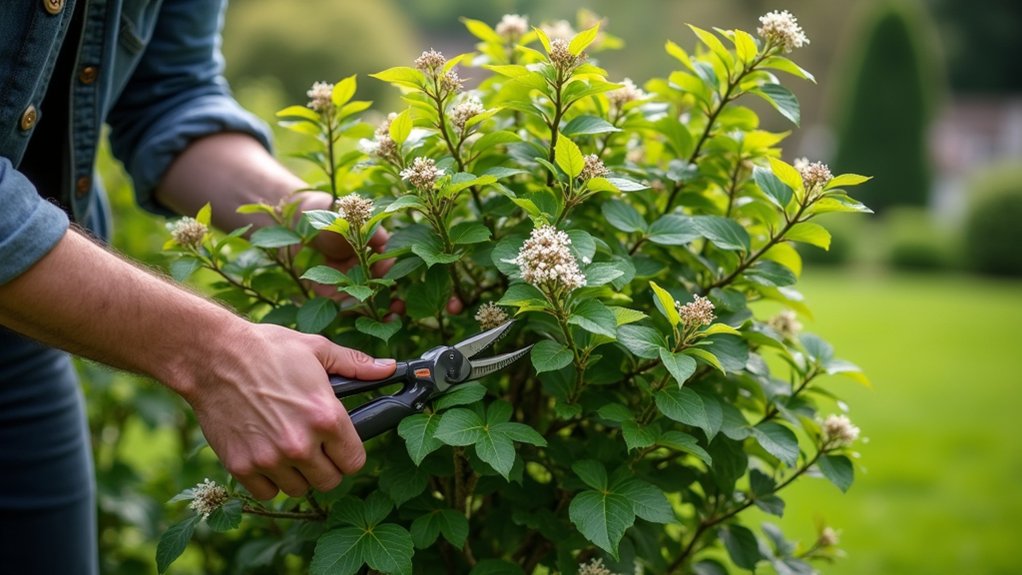
Once you’ve chosen the right pruning time, shape shrubs gradually to preserve their natural form and vigor. Use these practical pruning techniques to protect shrub health:
- Study the structure: Step back and identify the shrub’s natural outline, crossing branches, and weak growth before cutting.
- Thin selectively: Remove entire branches at their point of origin rather than shearing every tip. This improves light penetration and airflow.
- Reduce height carefully: Cut tall stems back to a strong lateral branch, keeping each cut just above a healthy bud facing outward.
- Check your progress: Pause frequently, rotate around the plant, and stop when the shape looks balanced. Don’t remove more than one-third of the canopy in one session.
Use sharp, clean tools, and avoid creating dense outer shells that shade interior growth and encourage weak, crowded stems.
Follow a Seasonal Lawn and Garden Routine
A seasonal lawn and garden routine keeps plants healthy by matching each task to weather, soil conditions, and growth cycles.
In spring, test soil, repair bare lawn patches, apply balanced fertilizer, and mulch borders after removing winter debris. Inspect new growth weekly for garden pests, and use targeted controls before infestations spread.
During summer, mow high, water deeply in the morning, and deadhead flowering plants to encourage continued blooms.
In autumn, aerate compacted lawn areas, overseed thin turf, divide overcrowded perennials, and remove diseased foliage. Apply composting techniques by mixing mature compost into beds, rather than burying fresh scraps near roots.
In winter, clean tools, protect tender shrubs, and avoid walking on frozen grass. Keep a seasonal checklist, but adjust timing according to local temperatures, rainfall, and plant performance.
Frequently Asked Questions
How Can I Attract Pollinators While Maintaining an Orderly Garden?
Attract pollinators with Wildflower plantings and native species selection, while maintaining neat edges and defined paths. Group plants deliberately, deadhead selectively, avoid pesticides, provide shallow water, and leave small undisturbed nesting areas for beneficial insects.
Which Tools Are Essential for Efficient Lawn, Border, and Shrub Maintenance?
You’ll need a mower, rake, spade, secateurs, hedge shears, and a hose. Add a lawn aerator for Lawn aeration, plus a half-moon edger for crisp Border edging and tidy, healthy planting areas.
How Can I Prevent Garden Pests Without Harming Beneficial Insects?
Protect your garden’s allies by using Companion planting to confuse pests, encouraging predators, and applying Organic pesticides sparingly. Inspect plants regularly, remove infestations manually, and avoid broad-spectrum chemicals that harm bees, ladybirds, and other beneficial insects.
When Should I Replace Aging Shrubs or Redesign an Overgrown Garden?
Replace shrubs when they decline despite care, outgrow their space, or develop persistent disease. Redesign overgrown beds during dormancy; use replanting strategies, improve soil, and select appropriately sized, resilient plants for long-term structure.
How Can I Improve Drainage in a Waterlogged Garden?
Like Noah preparing an ark, you’ll need a plan: test garden soil, add compost and grit, clear blocked gutters, install drainage solutions such as French drains, and raise beds for healthier roots and better airflow.
Conclusion
With a simple routine, you’ll keep lawns, borders, and shrubs vigorous year-round. Mow at the right height, water deeply, feed according to soil needs, and repair problems promptly. Don’t assume garden care requires constant work: consistent seasonal checks prevent costly neglect and reduce effort. Weed borders, improve soil, mulch, and prune shrubs at the proper time rather than cutting indiscriminately. Sharpen tools and mower blades, too. These practical habits will create a healthier, more resilient garden with less waste.