


Your roof may show a few “minor imperfections” before a serious problem develops. To catch trouble early, inspect shingles for curling, cracks, or missing pieces, and check gutters for loose granules. Look for moss, dark streaks, sagging areas, and damaged flashing around vents or chimneys. Inside, examine the attic for stains, damp insulation, musty odors, or daylight through the decking. These warning signs can point to hidden damage, but knowing which ones require immediate professional attention makes all the difference.
Key Takeaways
- Inspect shingles for curling, cracking, missing sections, exposed fasteners, loose granules, or dark patches.
- Examine flashing around chimneys, vents, skylights, valleys, and roof edges for rust, gaps, lifting, or separation.
- Check gutters for excessive shingle granules, and ensure gutters and downspouts remain securely attached and drain away from the foundation.
- Inspect the attic for water stains, damp insulation, warped wood, musty odors, or daylight through the roof deck.
- After severe weather, photograph dents, loose materials, punctures, or damaged ridge caps and contact a professional before problems worsen.
Spot These Early Signs of Roof Damage
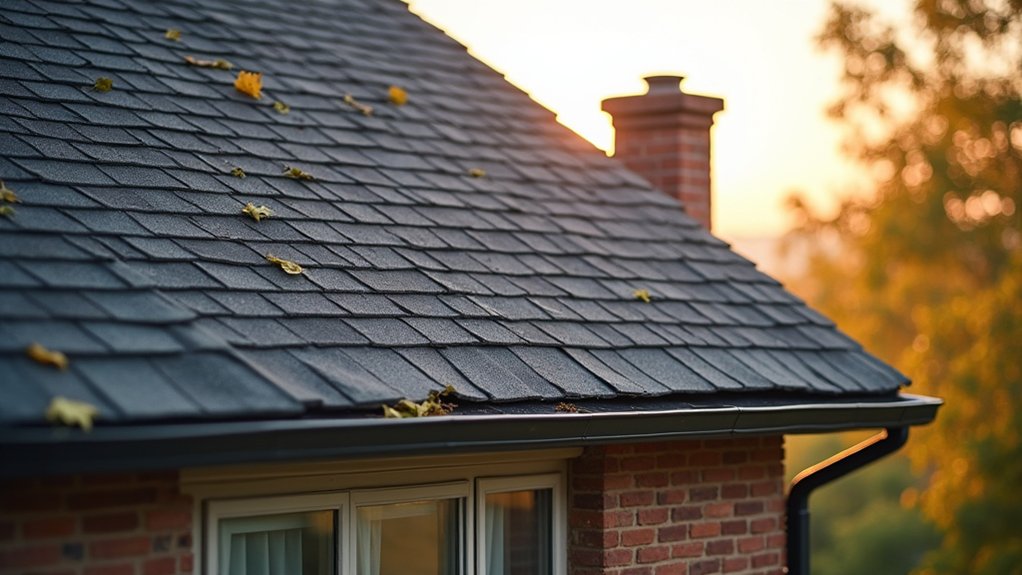
Spotting roof damage early can prevent leaks, structural problems, and expensive repairs. Start by examining your roof from the ground with binoculars. Look for missing, cracked, curling, or lifted shingles, exposed fasteners, sagging areas, and uneven rooflines.
Check metal flashing around chimneys, vents, and skylights for rust, gaps, or separation. Granules collecting in gutters may indicate aging shingles, while dark streaks or moss can signal moisture retention and reduced material durability.
Consider recent weather patterns when evaluating changes. Hail, high winds, heavy rain, and rapid temperature shifts can loosen roofing materials or create small punctures. After severe weather, inspect for scattered shingles, dents, and damaged ridge caps.
Don’t walk on the roof unless you’re trained and equipped. Photograph suspicious areas, record their locations, and contact a qualified roofer for prompt assessment before minor damage worsens.
Check Your Attic for Leaks and Daylight
After rain or strong winds, inspect your attic with a flashlight for water stains, damp insulation, warped wood, or a musty odor. Check the underside of the roof deck and around vents, chimneys, and ceiling penetrations. If you see wet spots, trace them uphill because water can travel along framing before dripping.
During daylight, turn off the attic lights and look for thin beams shining through the roof. Even small openings can admit moisture, pests, and cold air. Don’t step between joists; use a stable board and wear protective equipment.
Measure suspicious moisture with a meter, if available, and photograph the evidence. Persistent dampness may signal ventilation issues, while lingering moisture encourages mold growth.
Arrange a professional evaluation promptly, and dry affected materials before damage spreads.
Inspect Shingles, Flashing, and Gutters
Inspect shingles from the ground or a stable ladder for curling, cracking, missing pieces, loose granules, or dark patches that may indicate moisture beneath them. Check exposed nails, ridge caps, and valleys for movement or deterioration.
Examine flashing around chimneys, vents, skylights, and roof edges; gaps, lifted sections, or rust can let water enter. While inspecting the chimney, look for cracked mortar, damaged caps, or shifted flashing that could affect chimney integrity.
Clean gutters and downspouts, then confirm they’re firmly attached and draining freely. Watch for excessive granules, shingle fragments, or sagging sections inside gutters, which can reveal roof wear.
Make certain downspouts direct water away from the foundation. Also check roof ventilation openings for blockage, damage, or missing covers, since restricted airflow can trap heat and moisture beneath the roof.
Know When Roof Damage Needs Professional Help
Call a roofing professional when you find widespread shingle damage, active leaks, sagging roof sections, exposed underlayment, or deteriorated flashing around penetrations. These conditions can signal structural problems that worsen quickly, especially after severe Weather impact such as hail, high winds, or heavy rain.
Don’t climb onto a damaged roof; hidden weak spots can cause falls and additional damage. A professional can identify moisture beneath the surface, inspect decking and ventilation, and determine whether your Roof material needs repair or replacement.
Seek prompt help if ceiling stains grow, water reaches electrical fixtures, or you hear creaking indoors. Document damage with photos from the ground, note when symptoms appeared, and share your roof’s age and repair history.
Early evaluation helps prevent mold, insulation damage, and expensive emergency work.
Frequently Asked Questions
How Often Should Homeowners Schedule a Professional Roof Inspection?
Schedule a professional roof inspection annually, ideally before severe weather. Increase your roof inspection frequency after storms, when buying or selling, or near its expected lifespan; watch for signs of roof aging between visits.
Does Homeowners Insurance Cover Roof Damage Caused by Storms or Aging?
Insurance often covers sudden storm damage, but it usually won’t cover gradual aging issues or neglected maintenance. Check your policy’s exclusions, document damage promptly, and contact your insurer before repairs; don’t let coverage questions cloud your judgment.
How Long Does a Typical Roof Replacement Take?
A typical roof replacement takes one to three days, though weather, roof size, materials, and structural repairs can extend the timeline. Schedule a Roof inspection beforehand to support Damage prevention and avoid delays.
What Roofing Materials Offer the Best Durability for My Climate?
You’ll get the best climate durability from roofing materials matched to local conditions: metal for snow, wind, and fire; tile for heat; asphalt shingles for balanced performance; slate for exceptional longevity. Consult local codes.
Can Proper Attic Ventilation Extend My Roof’s Lifespan?
Yes—your roof can breathe easier with proper Attic ventilation. Balanced intake and exhaust vents reduce heat and moisture, preventing shingle deterioration, mold, and ice dams, ultimately extending Roof lifespan and lowering repair costs.
Conclusion
Catching roof damage early really does prevent costly repairs—but only if you investigate beyond obvious leaks. Don’t assume an intact ceiling means your roof’s sound. Check the attic for daylight, stains, damp insulation, or musty odors; then inspect shingles, flashing, gutters, and ventilation for warning signs. If you find sagging, widespread granule loss, or active moisture, don’t wait. Call a qualified roofing professional promptly. A brief inspection today can protect your home, budget, and safety tomorrow.