
Outdoor electrical faults cause thousands of home fires each year, and weather exposure can turn a minor defect into a serious hazard. You can reduce that risk by inspecting wiring and fixtures, choosing outdoor-rated materials, sealing every connection, and protecting circuits with GFCI outlets. Snow, rain, and seasonal temperature changes demand regular maintenance, while damaged components require prompt professional attention. Start with the warning signs that often appear before a dangerous failure.
Key Takeaways
- Choose outdoor-rated, UV-resistant fixtures and materials with suitable IP dust and water-resistance ratings.
- Inspect wiring, cords, seals, covers, sockets, and mounting points regularly for damage, corrosion, looseness, or water intrusion.
- Protect connections with outdoor-rated connectors, heat-shrink tubing, or gel-filled splice kits; keep cable entries downward.
- Use GFCI-protected circuits with weatherproof in-use covers, and test GFCIs regularly without bypassing or repeatedly resetting them.
- Turn off power before cleaning or repairs, gently remove snow and debris, and contact a licensed electrician for electrical faults.
Inspect Outdoor Wiring and Fixtures for Damage

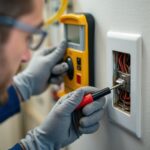
Before using outdoor lights, inspect every cord, cable, socket, and fixture for cracked insulation, exposed wires, loose connections, corrosion, or water damage.
Turn off power at the breaker before examining hardwired units, and never touch damaged wiring while energized.
Replace compromised cords, sockets, or fixtures rather than taping over defects or making temporary repairs.
Check that mounting hardware remains secure and that fixtures haven’t shifted, exposing connections or creating trip hazards.
Look for scorch marks, flickering, buzzing, or unusual heat; these signs require immediate shutdown and professional evaluation.
Keep junctions and connections clean, dry, and firmly enclosed, following the manufacturer’s instructions.
Routine inspections protect you from shocks and fires while preserving landscape aesthetics and supporting energy efficiency by preventing faulty lights from wasting power.
Reinspect after severe weather and before seasonal use.
Choose Weatherproof Outdoor Lighting Materials
Choose lighting labeled for outdoor use and rated for the conditions where you’ll install it.
Select fixtures with durable materials, such as powder-coated aluminum, stainless steel, or outdoor-rated plastic, to withstand sun, wind, snow, and temperature changes.
Look for corrosion resistance if you live near saltwater or use lighting around pools, sprinklers, or treated wood.
Check the fixture’s IP rating; a higher rating provides better protection from dust and water exposure.
Choose UV-resistant lenses and housings so sunlight won’t cause cracking, brittleness, or discoloration.
Match the fixture’s temperature rating to your climate, especially in areas with freezing winters or intense heat.
Use outdoor-rated bulbs and components that meet the manufacturer’s specifications.
Don’t install indoor fixtures outdoors, even beneath a covered porch, unless their labels specifically permit it.
Seal Connections Against Rain and Moisture
Seal every outdoor lighting connection so rain and condensation can’t reach energized parts. Before you work, switch off the circuit breaker and verify that power is absent. Use listed, outdoor-rated wire connectors, heat-shrink tubing, or gel-filled splice kits matched to the cable type. Don’t rely on electrical tape alone; it can loosen, crack, or trap moisture.
Keep cable entries facing downward when possible, and tighten weatherproof fixtures’ fittings, gaskets, and covers without damaging them. Apply an approved outdoor sealant around fixed penetrations, but don’t block drainage paths designed by the manufacturer. Leave no exposed copper, loose strands, or damaged insulation.
After sealing connections, inspect each joint for gaps and tug gently to confirm it’s secure. Replace compromised components promptly. If water has entered a box or fixture, stop and call a qualified electrician.
Protect Outdoor Electrical Systems From Snow
Protect outdoor connections with weatherproof covers and seals to keep melting snow from reaching electrical components.
Clear snow accumulation from fixtures, outlets, and cables without striking or damaging them.
After storms, inspect for cracked housings, exposed wires, or other winter damage, and shut off power before making repairs.
Seal Outdoor Connections
Before snow arrives, inspect every outdoor lighting connection and seal it with weatherproof, code-rated covers or enclosures. Tighten fittings, replace cracked gaskets, and confirm each box, junction, and receptacle carries an appropriate outdoor rating.
Use in-use covers that protect plugs while cords remain connected, and keep connections elevated where practical to reduce exposure to melting snow and standing moisture.
Apply only manufacturer-approved sealants; never block drainage openings or wrap energized equipment in plastic. Check cable entries for gaps, then install compatible strain reliefs so movement doesn’t loosen the seal.
Smart technology can improve energy efficiency, but smart plugs, timers, and controllers also need weather-rated housings.
Turn off power at the breaker before inspecting or servicing wiring. If water has entered a connection, stop and call a licensed electrician.
Clear Snow Accumulation
Clear snow from outdoor lights, cords, receptacles, and electrical enclosures after each storm, using a soft broom or gloved hands rather than a shovel or metal tool that could damage insulation. Snow accumulation can block ventilation, trap moisture, add weight, and conceal hazards around your outdoor electrical system.
Remove it gently before switching lights on, and keep snow away from ground-fault circuit interrupter (GFCI) outlets, plugs, and connection covers. Don’t pile shoveled snow against fixtures, extension cords, or enclosures, where melting can direct water toward electrical parts.
Keep pathways to switches and receptacles clear so you won’t tug cords or step on concealed wiring. If conditions are icy, turn off power before clearing nearby areas and wear insulated, nonslip gloves.
These simple habits support outdoor lighting safety throughout winter and help prevent avoidable electrical exposure.
Inspect Winter Damage
After snow and ice events, inspect outdoor lights, cords, receptacles, and electrical enclosures for cracked housings, loose connections, exposed wires, water intrusion, or signs of impact.
Check fixtures buried by drifts or struck by shovels, plows, branches, or falling ice. Frost damage can split plastic, lift fittings, and create openings that admit moisture.
Don’t energize equipment showing damage; switch off the circuit at the breaker and arrange professional repairs. Keep children and pets away until the area is safe.
Examine ground-fault circuit interrupters (GFCIs) and test them according to the manufacturer’s instructions. Replace damaged cords and seals rather than patching them with tape.
As you restore your winter landscape, confirm fixtures remain firmly mounted, connections stay elevated, and drainage paths remain clear.
Document recurring problems so you can improve protection before the next storm.
Install GFCI Protection for Outdoor Circuits
Install GFCI outlets on outdoor circuits where they’re readily accessible and protected from weather.
Test each GFCI regularly, and press Reset immediately if it trips.
If it won’t reset, stop using the circuit and have a qualified electrician inspect it.
GFCI Outlet Placement
Place GFCI protection at the outlet or breaker supplying every outdoor circuit, including receptacles for lights, tools, and seasonal equipment. During GFCI installation, choose weather-resistant, tamper-resistant receptacles rated for wet locations. Position each device where you can reach it without stepping into puddles or working near energized equipment. Keep outlets at least 12 inches above grade, or follow your local code and manufacturer instructions. Install an in-use cover that stays closed while a plug remains connected, protecting the receptacle from rain and snow.
- Protect detached garages, sheds, patios, and garden circuits.
- Use listed outdoor boxes with sealed cable entries.
- Keep cords and connections elevated from standing water.
- Don’t install outlets beneath dripping roof edges.
- Hire a licensed electrician for new circuits or uncertain wiring.
Correct placement strengthens outlet safety and helps prevent shock, fire, and equipment damage.
Test and Reset Regularly
Proper placement protects outdoor GFCI outlets, but you must also verify that the protection works. Press the TEST button monthly and after storms, landscaping, or any electrical changes. The outlet should click, cut power, and leave connected lighting off.
Press RESET firmly to restore power. If the test fails, the outlet won’t reset, or it trips repeatedly, stop using the circuit and call a licensed electrician. Don’t bypass the GFCI or keep resetting it to operate a Smart timer, color changing lights, or other equipment.
Keep the cover closed, inspect for cracks, moisture, corrosion, and loose connections, and replace damaged components promptly. Test portable GFCI adapters according to their instructions, too.
Teach household members to recognize a tripped outlet, and never work on energized outdoor wiring.
Maintain Outdoor Lighting Through Every Season
Outdoor lighting needs seasonal care to stay reliable and safe. Inspect fixtures at the start of each season, and adjust maintenance for changing weather. Keep lenses clear so you’ll preserve brightness, landscape aesthetics, and energy efficiency.
- Remove leaves, dirt, and snow from fixtures, lenses, and solar panels.
- Check seals, covers, and mounting points for moisture, cracks, or looseness.
- Trim nearby branches and plants so they won’t block light or damage wiring.
- Confirm timers and photocells match shorter winter days and longer summer evenings.
- After storms, clear standing water and verify fixtures remain firmly positioned.
Use a dry cloth for delicate surfaces, and switch off the lighting before cleaning. Don’t use metal tools near energized components.
Replace batteries in solar units according to the manufacturer’s schedule, and store removable fixtures in a dry location during severe weather.
Seasonal attention extends fixture life and keeps pathways visible.
Know When Outdoor Electrical Repairs Need a Pro
When an outdoor light stops working, don’t assume replacing a bulb will solve the problem. If you notice tripped breakers, flickering, burning smells, exposed wires, buzzing, or water inside a fixture, stop using the circuit and call a qualified electrician.
Don’t open energized boxes or attempt repairs in wet conditions. A professional can locate damaged insulation, failed connections, grounding problems, and overloaded circuits safely.
Check your area’s Electrical licensing requirements, and hire someone properly licensed and insured for the work. Ask for a written estimate that separates labor, materials, permits, and the expected repair cost.
Never choose an unqualified worker solely because the quote is lower; unsafe repairs can cause fires, shocks, or expensive damage. Turn off power only if you can do so safely, then arrange prompt service.
Frequently Asked Questions
How Often Should Outdoor Lighting Fixtures Be Professionally Inspected?
You should have outdoor lighting fixtures professionally inspected annually, or sooner after severe weather, damage, or electrical problems. Follow maintenance tips and safety precautions, and arrange immediate evaluation for flickering, exposed wiring, or water intrusion.
Can Outdoor Lighting Attract Pests or Create Unwanted Wildlife Hazards?
Yes, outdoor lighting can cause Pest attraction and Wildlife hazards by drawing insects and nocturnal animals. You’ll reduce risks by using shielded, warm-colored fixtures, limiting operation, removing food sources, and inspecting wiring regularly.
What Energy-Efficient Bulbs Work Best for Outdoor Lighting?
Energy-efficient outdoor lighting starts with Energy saving LEDs: they provide bright, long-lasting illumination while using minimal electricity. Choose Solar powered bulbs for paths and gardens, and select weather-rated fixtures to guarantee safe, dependable performance year-round.
How Can Outdoor Lights Reduce Glare and Protect Neighboring Properties?
You can achieve glare reduction by aiming fixtures downward, using shields, selecting warm, lower-lumen bulbs, and installing timers. Protect neighboring properties by directing beams away from windows, checking boundaries, and adjusting brightness responsibly for property protection.
Are Smart Outdoor Lighting Controls Safe and Reliable?
Like a well-trained sentry, smart controls can keep outdoor lighting safe and reliable. Choose certified devices, protect connections, update software, and verify wiring safety. You’ll gain automation without sacrificing secure operation or electrical protection.
Conclusion
Keep outdoor lighting, wiring, and fixtures bright, bonded, and battle-ready through every season. Inspect for cracks, corrosion, loose mounts, and moisture, then replace damaged parts promptly. Choose weatherproof materials, seal every connection, and point openings downward so rain and snow can’t seep in. Test your GFCI protection regularly, and don’t gamble with hidden hazards. If a repair involves live wiring or serious damage, call a licensed electrician to restore safe, dependable outdoor illumination.