
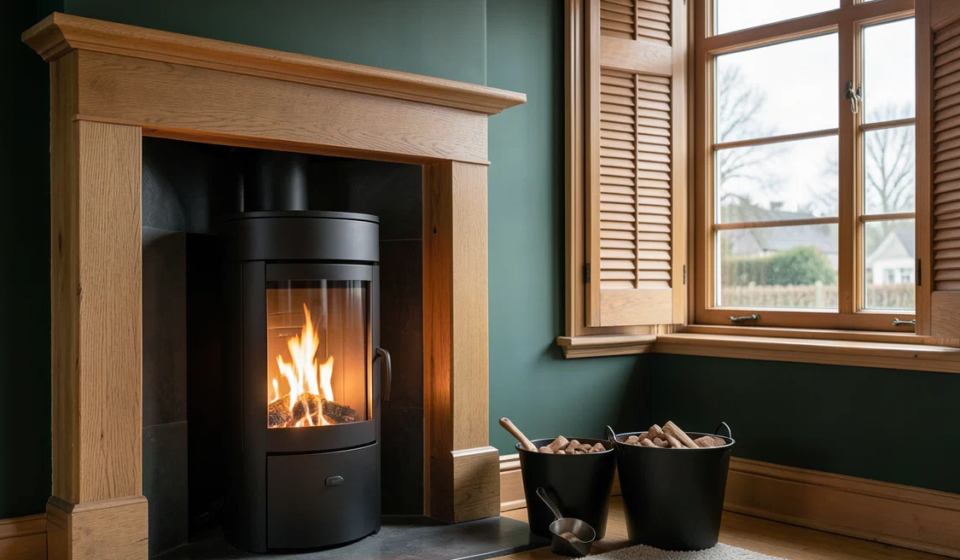

Choosing between a log burner and a pellet burner is like choosing between a hands-on craft and a well-tuned machine. You’ll need to weigh fuel costs, heating efficiency, daily convenience, maintenance, storage, emissions, and installation requirements. A log burner may suit you if you value traditional warmth and have reliable access to seasoned wood, while a pellet burner offers precise, automated heating. The right choice depends on how each system fits your home, budget, and routine.
Key Takeaways
- Choose a log burner for authentic flames, manual control, and homes with affordable, reliably seasoned firewood.
- Choose a pellet burner for automated feeding, programmable thermostats, consistent heat, and reduced daily handling.
- Compare fuel prices, delivery reliability, storage requirements, and estimated annual consumption before deciding.
- Assess efficiency, emissions, room size, chimney compatibility, and local regulations with a qualified installer.
- Plan for regular chimney sweeping, servicing, ash removal, and safety checks, including carbon-monoxide alarms.
Log Burner or Pellet Burner: Which Fits You?
Choosing between a log burner and a pellet burner depends on how you heat your home, how much time you can dedicate to maintenance, and the fuel available to you.
Choose a log burner if you value a traditional flame, have dependable access to seasoned firewood, and don’t mind regular loading, ash removal, and storage planning. Its aesthetic appeal suits period properties and rooms designed around a visible fire.
Choose a pellet burner if you want convenient operation, consistent fuel sizing, and easier scheduling through automated controls. You’ll need reliable electricity, dry pellet storage, and routine cleaning of the appliance and flue.
Consider environmental impact carefully: sustainably sourced logs can offer low-carbon heating, while certified pellets may reduce emissions, depending on production, transport, and local air-quality requirements.
Assess space, budget, and daily habits before deciding.
How Log and Pellet Burners Work
Log burners burn seasoned logs on a grate, drawing air through adjustable vents to control combustion, while their heat radiates from the stove body and warms the room through convection. You’ll need to load logs manually and remove ash regularly. Keep the door sealed during operation, and use dry wood to support clean, steady burning.
Pellet burners use compressed wood pellets stored in a hopper. An auger feeds pellets automatically into a combustion chamber, while a fan supplies controlled airflow and circulates warm air. You’ll set the thermostat or heat level, but you’ll need electricity for the controls, motor, and fan. Automatic ignition simplifies starting and stopping.
Both appliances rely on biomass, placing them among renewable energy options. You may also encounter alternative fuel sources, but always check your appliance’s approved-fuel guidance before burning anything else.
Compare Heating Costs and Efficiency
Compare log and pellet prices in your area, including delivery, storage, and seasonal fluctuations.
You’ll also need to assess each burner’s efficiency, measured heat output, and how consistently it warms your room.
These figures show which option delivers the most usable heat for your budget.
Fuel Cost Comparison
When you compare heating costs, you’ll need to take into account both fuel prices and appliance efficiency rather than judging by the cost of a bag of pellets or a load of logs alone. Check local prices per kilowatt-hour, including delivery, storage, and seasonal fluctuations.
Well-seasoned logs may cost less where local supplies are plentiful, but buying green or damp wood can increase your effective expense. Pellets often have a higher purchase price, yet their consistent size and availability can make budgeting easier.
Consider your appliance’s electricity use, servicing, and replacement parts when calculating annual running costs. Compare certified suppliers, and investigate alternative fuel sources before committing.
Transport distance and production methods also affect environmental impact, which may influence your overall value assessment beyond the invoice.

Efficiency and Heat Output
Efficiency determines how much usable heat you get from each unit of fuel. Modern pellet burners typically achieve higher, steadier efficiency because automated feeding maintains consistent combustion. You’ll also get predictable heat output and precise thermostat control, which can reduce wasted fuel and heating costs.
Log burners can deliver strong radiant heat, but performance depends on dry, properly sized logs, loading technique, and chimney operation. Moisture content below 20% helps combustion; wet wood lowers output and increases smoke.
Although a log burner may cost less to run where firewood is inexpensive, its variable output can make room temperatures harder to regulate.
Consider your priorities: pellets offer convenience and efficiency, while logs provide aesthetic appeal and independence from electricity. Compare appliance ratings, installation requirements, maintenance, and environmental impact before choosing.
Correct sizing prevents overheating and improves overall efficiency.
Weigh Convenience, Control, and Maintenance
You’ll find that a log burner demands hands-on fuelling, while a pellet burner automates much of your daily routine.
Compare how precisely each system controls heat, including thermostats, timers, and fuel adjustment.
You’ll also need to account for cleaning, ash removal, servicing, and component maintenance.
Everyday Convenience
Everyday convenience often determines whether a log burner or pellet burner fits your routine. A log burner gives you an authentic flame, strong indoor ambiance, and aesthetic appeal, but you’ll need dry logs, storage space, regular loading, and ash removal.
A pellet burner simplifies daily use: you can pour fuel into a hopper, use compact bags, and remove ash less frequently. Consider these practical demands:
- Log storage must stay dry, accessible, and protected from pests.
- Pellet bags require a dry location and careful lifting.
- You’ll handle more ash and soot with logs.
- Pellet systems need electricity and periodic component cleaning.
- Both appliances require professional servicing and chimney maintenance.
Choose logs if you enjoy hands-on tending and natural fuel. Choose pellets if you value fewer daily chores and a tidier routine. Neither option eliminates maintenance, so plan cleaning and servicing before installation.
Heating Control
Heating control differs sharply between the two systems: a log burner gives you direct, manual control by adjusting the air vents and adding fuel, while a pellet burner uses an electronic thermostat to regulate feed rate and heat output.
You’ll need to anticipate temperature changes with logs, selecting suitably sized pieces and allowing for burn-time variations. Your results also depend on firewood seasoning: properly dried logs burn more predictably than damp fuel.
A pellet burner offers steadier room temperatures and programmable schedules, so you can set different outputs for mornings, evenings, or overnight periods. However, its performance depends on consistent pellet production and uniform fuel quality.
Choose a log burner if you value hands-on control and a natural flame; choose pellets if you prioritise precise, largely automatic regulation.
Maintenance Requirements
Maintenance differs in both frequency and effort: a log burner needs regular ash removal, glass cleaning, grate checks, and annual chimney sweeping to prevent creosote buildup. You’ll also need dry Fuel storage, which demands space and protection from rain.
A pellet burner typically produces less ash, but you’ll empty its pan, clean the burn pot, inspect seals, and vacuum internal passages regularly. Its automated feed system adds convenience, yet moving parts and electronics require professional servicing.
- Check door seals before each heating season.
- Sweep either appliance according to usage and local regulations.
- Keep vents unobstructed for safe combustion.
- Store pellets or logs away from moisture.
- Assess Environmental impact when choosing fuel sources.
Choose logs if you accept hands-on upkeep and simpler mechanics. Choose pellets if you value predictable operation, provided you’ll maintain power-dependent components and arrange reliable servicing.
Never delay repairs or ignore unusual smoke, odors, or performance changes.
Understand Fuel Storage and Availability
Before choosing a log or pellet burner, assess how you’ll store and source its fuel. Fuel storage affects daily convenience, available space, and heating costs.
Logs need a dry, ventilated shelter, such as a covered wood store, and you’ll need enough room to season or stack them. Buy only well-seasoned wood, and confirm local suppliers can deliver your preferred species throughout winter.
Pellets require clean, dry storage because moisture causes swelling and disintegration. You can use sealed bags, a dedicated hopper, or a bulk silo, depending on your burner and consumption.
Check whether suppliers offer regular deliveries, and compare minimum order quantities, delivery charges, and seasonal price changes. Fuel availability matters particularly in remote areas, where supply interruptions can leave you without heat.
Estimate annual demand before committing.
Check Emissions, Installation, and Safety
Check the burner’s emissions rating and confirm that it complies with current local air-quality regulations before buying. Compare certified test results, not vague eco claims, to reduce Environmental impact and meet Regulatory standards. Arrange professional installation, because incorrect clearances or flue connections can cause fire, smoke leakage, or carbon-monoxide exposure.
- Verify required permits and inspections with your local authority.
- Have a qualified installer assess the chimney, flue, ventilation, and hearth.
- Maintain manufacturer-specified distances from walls, furniture, and combustibles.
- Install carbon-monoxide and smoke alarms, then test them regularly.
- Schedule sweeping, servicing, and emissions checks at recommended intervals.
Use only approved fuel, operate the appliance as instructed, and keep children away from hot surfaces. Ask your installer to document commissioning, airflow settings, and emergency shutoff procedures. Keep the manual, certificates, and maintenance records accessible.
Never modify the flue or bypass safety controls; contact a qualified technician when performance changes.
Choose the Right Burner for Your Home
Choose the right burner by matching its heat output, fuel availability, operating demands, and installation requirements to your home.
A log burner suits you if you have reliable dry-log storage, enjoy hands-on tending, and want heat during power cuts. You’ll need space for seasoning wood and time to load, clean, and monitor the fire.
A pellet burner offers automated feeding, precise temperature control, and convenient scheduling, but you’ll need electricity, protected pellet storage, and regular maintenance.
Compare each model’s efficiency, emissions, and compatibility with your chimney and room size.
Consider aesthetics and environmental impact: logs create a traditional focal point, while pellets provide a cleaner, more uniform appearance.
Choose certified fuel, check local rules, and calculate running costs before committing.
Professional sizing and installation will improve safety, comfort, and performance.
Frequently Asked Questions
Can I Cook Food on a Log Burner or Pellet Burner?
Yes, you can cook on some log burners designed with a flat hotplate, but not most pellet burners. Check your manual, use suitable cookware, and never block ventilation. Cooking capabilities and flavor differences vary considerably.
Do These Burners Affect Home Insurance Requirements?
Yes, these burners can change your home insurance requirements. Check your policy before installation, disclose the appliance, use certified installers, and arrange inspections. Safety considerations and Insurance implications may affect premiums, coverage, and compliance.
Are Log and Pellet Burners Suitable for Use During Power Outages?
Log burners generally work during outages, while pellet burners usually need electricity for feeding and controls. You’ll need alternative fuel sources, proper ventilation, carbon-monoxide alarms, and safety considerations, including safe operation, maintenance, and backup heating plans.
Can I Install Either Burner in a Conservatory or Garden Room?
You can install either burner in a conservatory or garden room, but treat the building like a ship: check structural support, ventilation, flue clearances, and regulations. Compare fuel efficiency and installation costs before choosing.
How Long Does Each Burner Typically Last Before Replacement?
You’ll typically replace a log burner after 10–20 years and a pellet burner after 10–15 years. With diligent burner maintenance, you’ll extend service life; budget replacement costs for components sooner, especially electronics.
Conclusion
Choosing between a log burner and pellet burner comes down to how you live. If you’ve recently found a dependable local wood supplier, a log burner may give you warmth, atmosphere, and lower fuel costs. If you value effortless control, steady temperatures, and cleaner operation, pellets may suit you better. Coincidentally, the right choice often becomes clear when you compare your daily routine with your storage space, budget, and heating needs—then install and maintain your burner safely.