


Like a river seeking the sea, surface water will follow the easiest path across your property—whether you’ve planned it or not. Start by inspecting flow patterns, checking foundation grading, and clearing gutters, downspouts, and outlets. Then evaluate drainage systems, hardscaped areas, erosion risks, and seasonal maintenance needs. A few overlooked warning signs can turn routine runoff into costly damage, so the next steps matter.
Key Takeaways
- Inspect runoff during and after storms, noting flow sources, ponding, soggy areas, erosion, and recurring drainage problems.
- Maintain positive grading away from foundations, keeping soil below siding and vents while correcting settling or low spots.
- Clean and inspect gutters, downspouts, catch basins, swales, and channel drains at least seasonally and after severe storms.
- Choose drainage systems based on slope, soil permeability, and runoff volume, ensuring outlets discharge onto stable, vegetated ground.
- Test drainage paths before storm seasons, document repairs, and schedule follow-up inspections after major weather or landscaping changes.
Inspect Your Property’s Water Flow

Start by observing how rainwater moves across your property during and after a storm. Walk the site during rainfall, then return several hours later to identify channels, puddles, soggy areas, and places where runoff leaves the landscape.
Note how driveways, patios, roofs, and downspouts contribute flow, and record observations with photos or a simple property sketch.
Review your landscaping design for surfaces that direct water toward planting beds, lawns, or collection areas.
Watch whether soil absorbs water steadily or sheds it quickly, especially after repeated storms.
Use these findings to plan water harvesting features, such as rain barrels, cisterns, swales, or rain gardens, where they can capture runoff safely.
Keep notes on storm intensity and duration so you can distinguish isolated flooding from recurring flow patterns.
Check Grading Around the Foundation
Your runoff observations should lead you to the foundation, where proper grading helps keep stormwater away from the house. Walk the perimeter after rain, watching for low spots, ponding, or soil that slopes toward walls. Ideally, the ground should fall consistently away from the foundation.
- Measure the slope with a level, stakes, and string.
- Add clean fill to shallow depressions, then compact it carefully.
- Check for Soil compaction that prevents water from infiltrating evenly.
- Remove Vegetation barriers that redirect flow against the structure.
- Recheck grading after settling, heavy rain, or landscaping changes.
Keep soil below siding, vents, and other vulnerable materials. Don’t pile mulch against the foundation, because it can conceal drainage problems and retain moisture. If water still collects near the house, consult a drainage professional before making extensive changes.
Correct grading protects your foundation, reduces seepage risk, and supports healthier surrounding soil.
Maintain Gutters and Downspouts
Once grading directs water away from the foundation, keep gutters and downspouts clear so they can carry roof runoff to a safe discharge point.
Schedule Gutter cleaning at least twice yearly, and inspect them after heavy storms. Remove leaves, sediment, and roof granules, then flush each section with a hose.
Check for sagging, rust, separated seams, and loose hangers; repair leaks promptly before water reaches walls or foundation soil.
Confirm downspouts remain firmly attached and free of nests or blockages.
Extend each outlet several feet from the foundation with Downspout extensions, directing discharge onto stable, well-drained ground.
Secure extensions so they don’t shift during storms, and keep their outlets visible for inspection.
Wear gloves, use a stable ladder, and hire a professional when roof height or damage makes maintenance unsafe.
Choose the Right Surface Drainage System
Choose a surface drainage system that matches your yard’s slope, soil, rainfall, and runoff volume. Assess where water collects, how quickly it moves, and whether nearby outlets can accept discharge. Consider these practical factors:
- Measure surface permeability before selecting channels or catch basins.
- Use grated drains for patios, driveways, and other paved areas.
- Select durable drainage materials that resist corrosion, frost, and traffic.
- Match channel capacity to your roof and hardscape runoff.
- Install grates flush with surrounding surfaces to prevent trips.
Maintain a consistent fall toward the outlet, and confirm local requirements before construction. Choose removable grates so you can clear leaves and sediment easily.
Avoid directing concentrated flow toward foundations, neighboring properties, or erodible slopes. A landscape professional can verify sizing, elevations, and connections when runoff is complex or stormwater volume is high.
This careful selection improves performance, safety, and long-term maintenance.
Install French Drains for Persistent Water

When water continues pooling beside a foundation, along a walkway, or in a low section of the yard, install a French drain to intercept and redirect subsurface flow.
Begin French drain installation by mapping the wet area and confirming a safe outlet downhill or toward an approved discharge point.
Excavate a trench with consistent slope, typically about one percent, then line it with water-permeable geotextile fabric.
Add washed gravel, place a perforated pipe with its holes facing downward or according to the manufacturer’s instructions, and cover it with more gravel.
Wrap the fabric over the stone before backfilling to prevent soil intrusion.
Use these Water diversion techniques to keep groundwater away from structures, but don’t discharge water onto neighboring property.
Inspect the outlet periodically and clear sediment before flow becomes restricted.
Control Runoff From Hardscaped Areas
Control runoff from patios, driveways, and walkways by replacing select sections with permeable pavers, gravel, or other porous materials.
Direct remaining water toward planted areas, swales, or approved drainage outlets—not your foundation or a neighbor’s property.
Make certain surfaces slope away from your home and keep channels, inlets, and joints clear of debris.
Install Permeable Surfaces
Permeable surfaces help hardscaped areas drain runoff into the soil instead of sending it toward your foundation or overloading nearby drainage systems. Choose permeable pavement, porous concrete, or interlocking pavers for walkways, patios, and driveways. Build a properly graded, aggregate-filled base so water can spread and support surface infiltration.
- Match the material to traffic, climate, and expected loads.
- Excavate deeply enough for a stable, well-compacted subbase.
- Separate soil from aggregate with suitable geotextile fabric.
- Keep sediment, leaves, and sealants from clogging open joints.
- Inspect low areas after storms and repair settled sections promptly.
Confirm local requirements before installation, especially where expansive clay, high groundwater, or contaminated soil limits infiltration.
Clean the surface regularly with a vacuum or pressure washer set appropriately for the material. Permeable design reduces ponding while preserving usable outdoor space and protecting your drainage system.
Direct Runoff Safely
Direct runoff from patios, driveways, and walkways toward approved drainage points instead of letting it collect beside the foundation or flow onto neighboring property. Shape hardscaped surfaces with a consistent slope, and keep joints, channels, and catch basins clear of leaves and sediment.
Install trench drains at garage entrances or low points where sheet flow could create hazards. Use downspout extensions, swales, or solid underground piping to move water safely to a suitable outlet, never toward a septic system or unstable slope.
Consider rainwater diversion into planted areas, rain barrels, or cisterns when local rules and soil conditions allow. Stormwater harvesting can reduce runoff volume while supplying irrigation water.
Inspect every route after heavy rain, correct ponding promptly, and confirm discharge complies with municipal requirements and easements.
Prevent Erosion With Safe Water Discharge
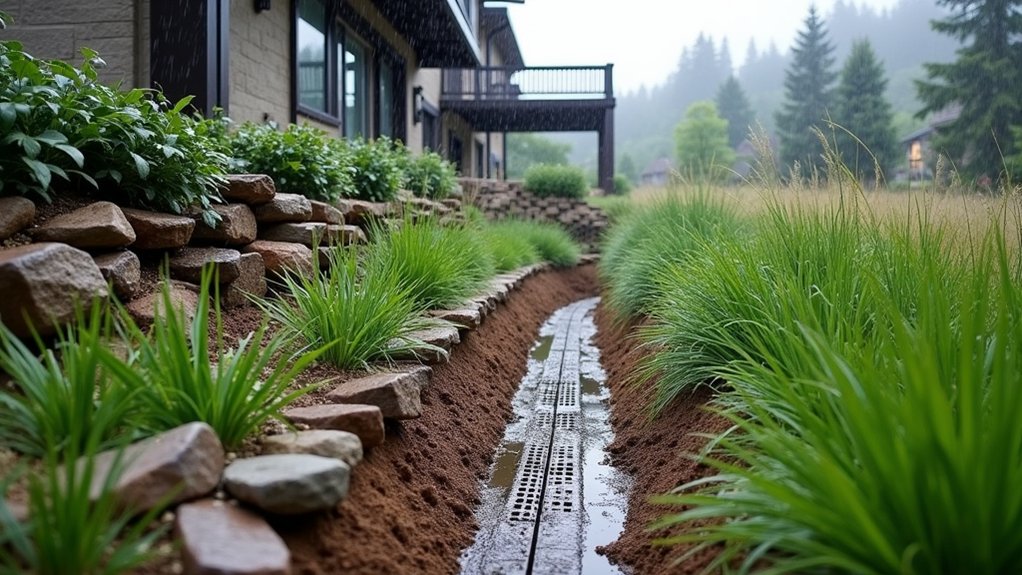
Managing where your downspouts and sump pump discharge water go helps prevent soil erosion and protects your foundation. Use erosion control and water diversion techniques to slow flow, spread discharge, and keep saturated soil away from footings.
- Extend downspouts at least several feet from your foundation.
- Discharge onto stable, vegetated areas rather than bare soil.
- Install splash blocks, pop-up emitters, or drainage swales to disperse water.
- Add river rock or erosion-control matting where runoff concentrates.
- Direct sump pump outlets away from slopes, walkways, and neighboring properties.
Check that each outlet releases water without creating channels or pooling. On steep grades, use stepped swales, check dams, or a dry well designed for local soil conditions.
Secure discharge pipes so they won’t shift during heavy flow. If erosion continues, consult a drainage professional before adding soil or reshaping the slope.
Follow a Seasonal Drainage Maintenance Checklist
Seasonal inspections keep your exterior drainage system clear, stable, and ready for changing weather. In spring, remove leaves, sediment, and winter debris from gutters, downspouts, catch basins, swales, and channel drains. Check that outlets discharge safely away from foundations and that soil hasn’t settled around inlets.
Before summer storms, test every flow path with a hose, then correct clogs, pooling, or erosion. Review your landscaping design to confirm new beds, mulch, or hardscape won’t block drainage.
In fall, clear falling leaves frequently and trim vegetation near grates. Before freezing weather, inspect exposed components for cracks and secure loose connections. If water remains slow or backs up, have a professional evaluate underground piping with appropriate inspection equipment.
Record each repair and schedule follow-up checks after severe storms. Consistent maintenance protects foundations, surfaces, and plants while reducing costly emergency repairs.
Frequently Asked Questions
When Should I Hire a Professional Drainage Contractor?
Hire a professional drainage contractor when you notice recurring flooding, standing water, erosion, foundation dampness, or blocked pipes. You’ll benefit from expert stormwater management and drainage system maintenance before expensive structural damage develops or worsens.
Do Local Regulations Require Permits for Exterior Drainage Installations?
Yes, you’ll often need permits for exterior drainage installations, but requirements vary locally. Contact your building or planning department before work. Confirm permit requirements, property boundaries, inspections, and regulatory compliance to avoid fines, delays, or required removal.
How Much Does a Residential Drainage Improvement Project Typically Cost?
Costs can run from $1,000 to $10,000 or more, depending on drainage type, site conditions, and labor. For accurate cost estimation, gather quotes and weigh budgeting considerations, including permits, excavation, materials, and maintenance.
Can Landscaping Plants Help Absorb Excess Surface Water?
Yes, landscaping plants can absorb excess surface water. Choose native, moisture-tolerant species, rain gardens, and deep-rooted grasses. Their plant absorption reduces runoff, while landscaping benefits include erosion control, filtration, and healthier soil.
What Warning Signs Indicate Serious Drainage Damage Beneath the Property?
You’ll want to act before trouble deepens: watch for foundation issues, sinking soil, persistent dampness, cracks, moldy odors, slow drains, or unexplained water bills. These often signal underground leaks requiring immediate professional inspection and repair.
Conclusion
Good drainage doesn’t happen by accident—it’s your property’s quiet shield against water’s steady pull. Inspect flow paths, maintain gutters, confirm foundation grading, and choose solutions that fit each problem, from surface drains to French drains. Guide runoff safely, protect soil from erosion, and adjust your maintenance with every season. When you clear blockages and correct pooling early, you’ll keep moisture moving, foundations secure, and landscapes thriving—turning heavy rain from a threat into a managed resource.


