
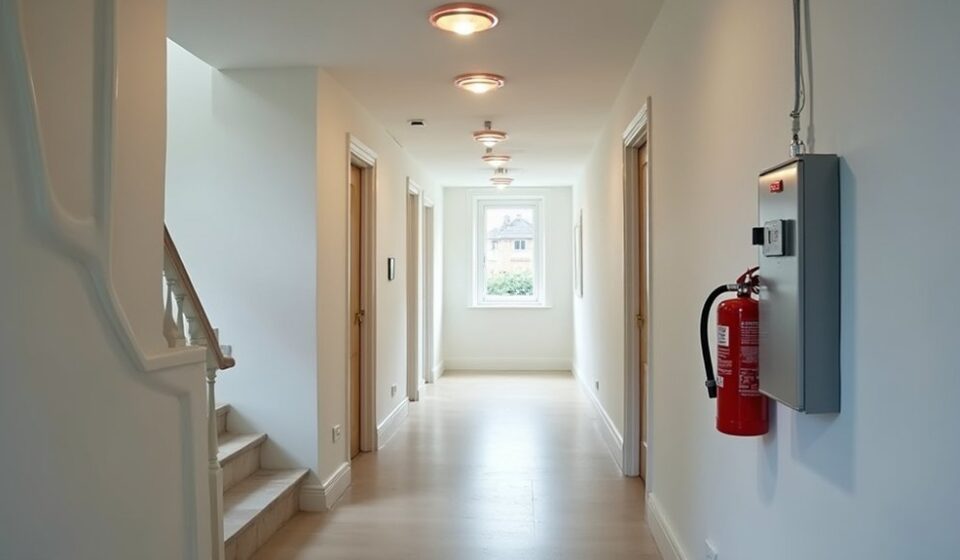
The Beginner’s Guide to UK HMO Fire Safety: Escape Routes, Alarms, and Mandatory Checks

If you own, manage, or live in a UK HMO, you’ll need to understand how escape routes, fire alarms, fire doors, and routine checks work together. You’re responsible for keeping shared paths clear, maintaining suitable detection systems, and documenting inspections and repairs. The exact duties can vary by property type and local authority requirements, so getting the basics right matters. Start by confirming whether your property qualifies as an HMO—and who holds each fire safety duty.
Key Takeaways
- Classify the property correctly as an HMO early, and check whether mandatory licensing or local authority requirements apply.
- Keep escape routes, corridors, stairs, and exits clear, unlocked, well-lit, and protected by properly maintained fire doors.
- Install suitable interlinked smoke alarms, heat detectors, and backup power in accordance with the property’s risk profile and BS 5839-6.
- Test alarms weekly and regularly inspect emergency lighting, signage, fire doors, extinguishers, and escape routes for defects.
- Record inspections, test results, repairs, certificates, training, and evacuation instructions, then reassess safety after alterations or incidents.
What Makes a Property an HMO?
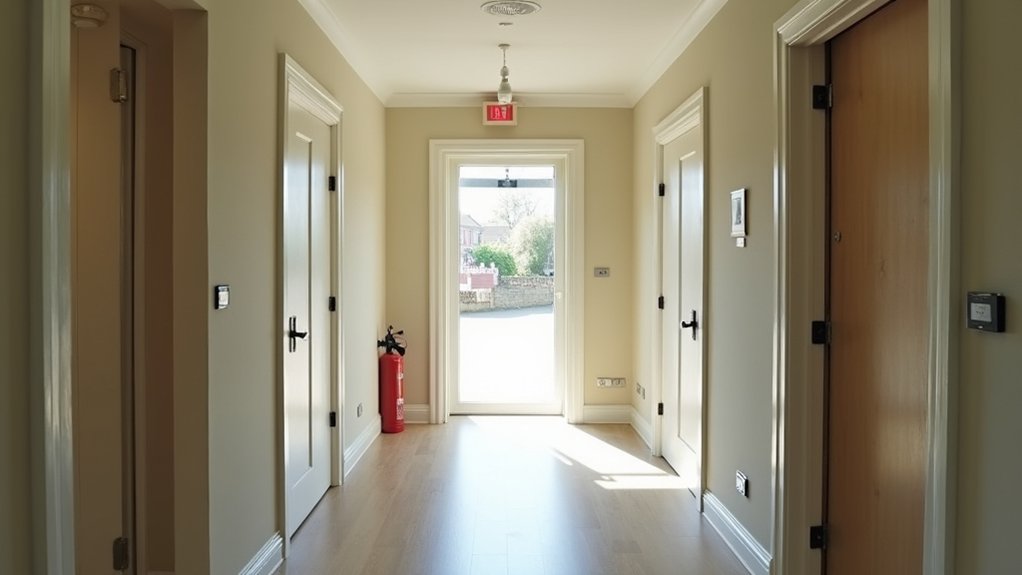
A property is generally an HMO if at least three people from more than one household live there and share facilities such as a kitchen or bathroom. You’ll usually see this arrangement in shared houses, bedsits, or converted flats.
A larger HMO may meet the mandatory licensing threshold when five or more occupiers from more than one household share facilities, although your council can require licences for smaller HMOs too. Check local Property licensing rules before you let rooms, because standards and additional licensing schemes vary by area.
HMO licensing may also apply to buildings converted into self-contained flats under specific conditions. Confirm the property’s occupancy, household structure, and layout with your council.
Getting the classification right early helps you identify the correct regulatory requirements and avoid enforcement action, without addressing fire-safety responsibilities at this stage.
Know Who Holds HMO Fire Safety Duties
Once a property is an HMO, the person who controls or manages it generally holds the fire-safety duties. As the landlord, letting agent, or managing company, you must identify risks, provide suitable precautions, and keep required records. Your Fire safety responsibilities may be shared with contractors, but you can’t assume another party has completed essential checks unless your agreement clearly assigns them and you verify performance.
Your key HMO compliance obligations include:
- Arrange a suitable fire-risk assessment and review it after significant changes.
- Maintain alarms, emergency lighting, fire doors, and other protective equipment.
- Give occupants clear safety information, training, and instructions.
You should also cooperate with your local council and fire and rescue authority. Keep inspection, maintenance, and training evidence accessible. If you’re unsure who carries a task, confirm responsibilities in writing and seek competent professional advice.
Clear accountability helps you stay compliant and protects residents.
Plan Safe HMO Escape Routes
Design escape routes so every resident can reach a safe place quickly, even if smoke blocks the usual path. Keep corridors, stairs, landings, and final exits clear, unlocked, and free from combustible storage. Provide a protected escape route where your risk assessment or local authority guidance requires one, and don’t rely on a single staircase if an alternative is reasonably practicable.
Fit self-closing fire doors correctly and maintain them, including seals, hinges, and closers.
Install Emergency lighting to illuminate routes during power failure, and position clear Exit signage at changes of direction, exits, and final doors. Display simple evacuation instructions where residents will see them.
Check routes regularly, record defects, and arrange prompt repairs.
Ensure every resident understands the route, assembly point, and procedure for reporting hazards.
Choose the Right HMO Fire Alarms
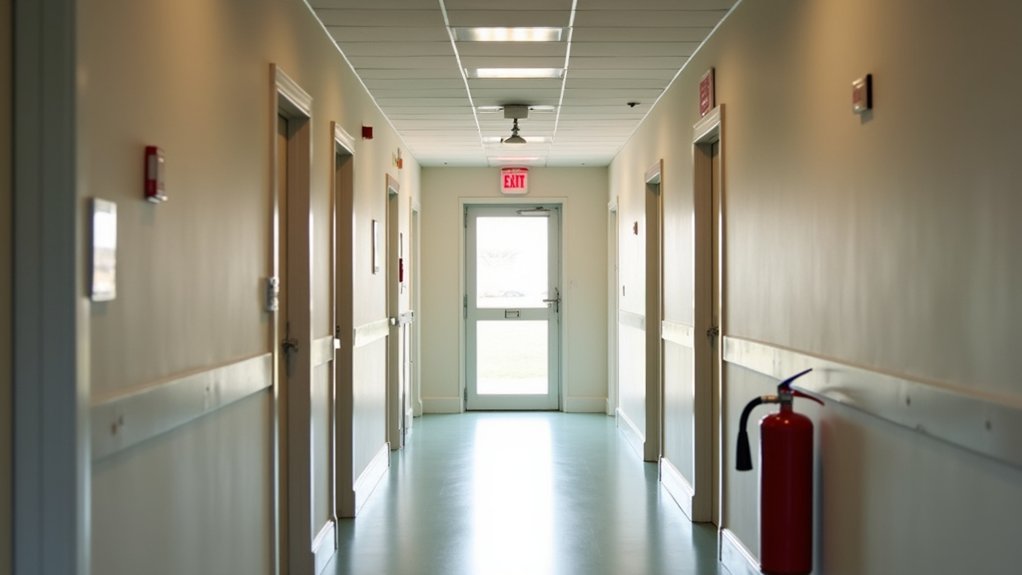
Choose fire alarms for the HMO’s risk profile, layout, and occupancy, following BS 5839-6 and any requirements set by your local authority or fire risk assessment.
Select an appropriate grade and category, then confirm whether mains-powered, interlinked alarms with battery backup are required. Wireless alarms can suit properties where cabling is disruptive, but you’ll need reliable links, compatible components, and documented testing.
Prioritise dependable smoke detection, supported by heat detection where cooking fumes could cause false alarms. Don’t rely on standalone domestic alarms unless your assessment permits them.
- Interlink every alarm so one activation alerts occupants throughout the property.
- Provide backup power and replace batteries or devices as the manufacturer specifies.
- Test the system regularly, record results, investigate faults promptly, and arrange competent servicing.
Keep certificates, product details, and maintenance records available for inspections.
A suitable system gives you early warning and supports compliance.
Protect Shared Areas and Individual Rooms
Protect shared areas and individual rooms with detection and warning that match their risks, layout, and occupancy.
Assess Shared corridor hazards, including blocked routes, cooking smoke, and fire doors that don’t close properly. Keep corridors, stairs, and landings clear, well lit, and protected from ignition sources. Provide suitable fire doors and confirm they remain closed unless held open by an approved, linked device.
Consider individual room fire risks, such as heaters, candles, overloaded sockets, and cooking equipment. Fit appropriate detection in bedrooms, communal rooms, kitchens, and circulation spaces, following the current British Standard and your fire-risk assessment.
Give residents clear instructions about alarms, escape routes, and keeping doors shut. Where a resident may need assistance, plan an individual evacuation arrangement.
Make sure warning systems can be heard throughout the property, including bedrooms, and provide visual or vibrating alerts where necessary.
Complete Required Fire Safety Checks
Complete each required check by testing fire alarms and confirming they operate correctly.
Inspect escape routes to make certain they’re clear, accessible, and compliant with current requirements.
Record every check, including dates, findings, and corrective actions, so you can demonstrate ongoing compliance.
Test Fire Alarms
Test your HMO’s fire alarms regularly to confirm they’ll warn occupants promptly in an emergency and meet UK fire-safety requirements. Follow each manufacturer’s instructions and your fire-risk assessment. Testing smoke detectors should include every alarm, including interconnected and mains-powered units.
Press each test button, confirm the sound reaches bedrooms and shared areas, and record the date, result, and any action taken.
- Arrange weekly user tests and log them consistently.
- Complete professional servicing at the frequency your risk assessment specifies.
- Investigate faults immediately; don’t silence, remove, or obstruct alarms.
Tell residents when you’ll test the system, but never rely on their reports alone. Replace damaged or expired units promptly, and complete battery replacement when the manufacturer requires it or a low-battery warning sounds.
Keep spare batteries and suitable replacement alarms available. If an alarm fails, provide an effective temporary control and obtain competent assistance without delay.
Retain test and maintenance records for inspection by your enforcing authority or fire-and-rescue service.
Inspect Escape Routes
Inspect every escape route regularly to confirm occupants can reach a safe place quickly and that it meets your fire-risk assessment and UK requirements.
Check corridors, stairways, doors, and final exits for obstructions, stored items, damage, or restricted access.
Keep Emergency exit routes clear at all times, including shared areas and external paths leading to a place of safety.
Confirm fire doors close fully, latch securely, and aren’t wedged open.
Check that escape lighting works and that signs remain visible, accurate, and appropriately positioned.
Review signage clarity from each room and along every route, particularly where changes in level or direction could cause confusion.
Make sure windows designated for escape open easily and remain unobstructed.
Arrange prompt repairs or corrective action when you identify a defect, and reassess routes after alterations, occupancy changes, or incidents.
Record Safety Checks
Once escape routes are confirmed, record each fire safety check and any action required. Keep a dated log for alarms, emergency lighting, fire doors, extinguishers, evacuation equipment, and electrical risks. Note who completed the check, what they found, and when you resolved defects.
Your records should demonstrate compliance with the Regulatory Reform (Fire Safety) Order 2005 and support your fire risk assessment.
- Schedule routine checks and document missed inspections promptly.
- Retain contractor certificates, test results, and repair invoices securely.
- Review records after incidents, changes to occupancy, or updated guidance.
You’ll need to make records available to enforcing authorities and explain how you manage outstanding risks. Use findings to update resident instructions, fire safety training, and emergency response arrangements.
Clear documentation helps you spot recurring problems, prove that you’ve acted responsibly, and reassure residents that protection measures remain effective.
Record HMO Fire Safety Compliance
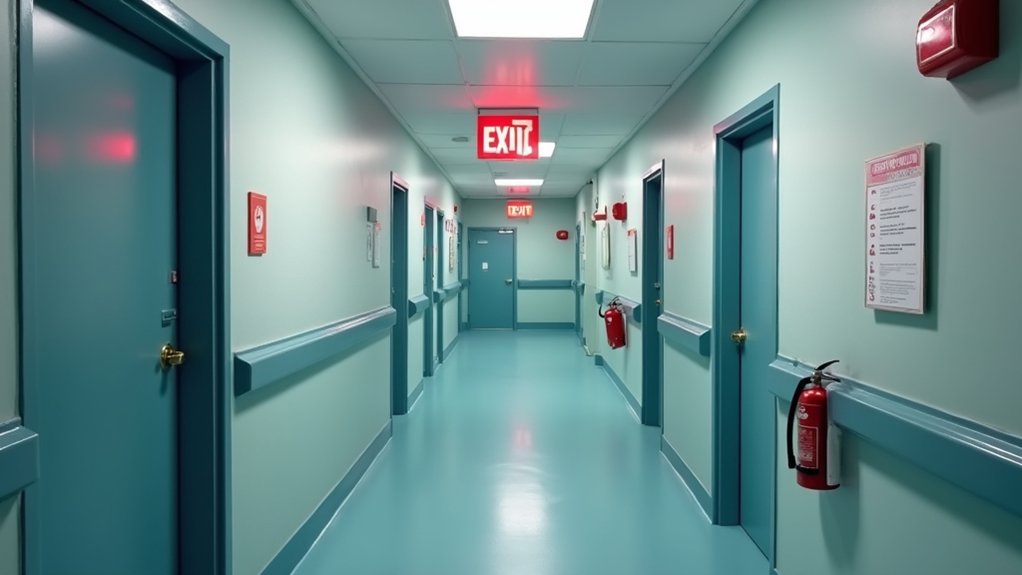
You’ll need to maintain clear fire safety records, including certificates, servicing details, and remedial actions.
Schedule all mandatory checks on time and keep reminders so nothing is missed.
Document each inspection outcome, including findings and completed corrective work, to demonstrate ongoing compliance.
Maintain Fire Safety Records
Keeping accurate fire safety records helps you demonstrate that your HMO meets UK legal requirements and that you’ve acted on identified risks. Store your fire risk assessment, actions taken, alarm information, and relevant contractor reports in one accessible file. Update it whenever circumstances change, such as alterations, new tenants, or identified hazards.
Your records should clearly show:
- Dates, findings, and responsible people for risk assessments and reviews
- Fire safety training completed by you, staff, and relevant occupants
- Emergency communication arrangements, including instructions and resident notifications
Keep evidence of resident information, evacuation guidance, and conversations about unresolved risks. Record why you’ve delayed any action and the planned resolution date. Protect personal data, while ensuring authorised people and enforcement authorities can access documents promptly.
Good records help you track responsibility, demonstrate ongoing management, and respond confidently during inspections or emergencies. Review them routinely so they remain accurate, legible, and complete.
Schedule Mandatory Safety Checks
Accurate records should support a clear schedule for mandatory fire safety checks, not simply document completed work. Create a calendar covering alarms, emergency lighting, fire doors, extinguishers, escape routes, and other systems required for your HMO.
Set reminders before each inspection, service, or test becomes due, allowing time to arrange qualified contractors and resolve access issues. Check current fire safety regulations and your local authority’s guidance so your timetable reflects applicable duties, manufacturer instructions, and risk assessments.
Assign responsibility to a named person, while retaining evidence of appointments, certificates, servicing intervals, and follow-up deadlines. Review the schedule after alterations, incidents, or changes in occupancy.
A consistent routine strengthens emergency preparedness, helps you demonstrate responsible management, and reduces the risk of missed checks. Keep it accessible to relevant staff and contractors.
Document Inspection Outcomes
After each inspection, record what was checked, who completed it, the date, findings, and any remedial action required. Keep entries clear, dated, and signed so you can demonstrate ongoing HMO fire safety compliance. Include alarm tests, emergency-lighting checks, fire-door inspections, evacuation-route reviews, and contractor reports.
Store records securely, but ensure your manager, enforcing authority, or fire-risk assessor can access them when required.
- Note defects precisely, assign responsibility, and set a completion deadline.
- Attach photographs, certificates, invoices, and follow-up results as supporting safety documentation.
- Complete Document verification regularly to confirm records remain accurate, current, and consistent with your fire-risk assessment.
Update the log after every repair, retest, or change to the property. If you discover a serious deficiency, act immediately, record interim controls, and escalate it to the responsible person.
A well-maintained inspection file helps you prove diligence and resolve concerns confidently.
Fix Common HMO Fire Safety Failures
Fixing common HMO fire safety failures starts with identifying risks during a documented inspection and correcting them without delay.
Clear escape routes by removing furniture, rubbish, bicycles, and stored items from corridors and stairways. Replace damaged fire doors, repair faulty self-closers, and guarantee doors shut fully without being wedged open.
Test smoke, heat, and carbon monoxide alarms, replace batteries where necessary, and arrange qualified repairs for hardwired systems.
Restore emergency lighting and keep fire extinguishers accessible, serviced, and correctly positioned.
Display clear evacuation instructions and provide suitable fire safety training, including what residents should do if an alarm sounds.
Maintain reliable emergency communication so occupants receive warnings and updates quickly.
Record every action, assign responsibility, and set completion dates.
Reinspect unresolved defects, and contact your landlord, managing agent, or competent fire-risk assessor when specialist advice is required.
Frequently Asked Questions
Can Tenants Use Candles, Incense, or Portable Heaters Inside HMO Bedrooms?
You can use candles, incense, or portable heaters only if your landlord’s rules allow them. Follow Candle safety and Incense precautions, never leave flames unattended, keep heaters clear, and report unsafe wiring immediately.
Are Fire Doors Required to Remain Closed When Rooms Are Unoccupied?
Yes, keep fire doors closed when rooms are unoccupied. Follow fire door regulations and prioritise unoccupied room safety: don’t wedge doors open, maintain self-closing devices, and report damaged hinges, seals, or closers promptly.
What Should Tenants Do if They Discover a Blocked Fire Exit?
Report the blocked fire exit immediately; treat it like a dam blocking a river. Follow Fire safety signage, alert your landlord, request Emergency evacuation guidance, and call emergency services if danger’s imminent. Never remove obstructions yourself or delay.
Can Landlords Recover HMO Fire Safety Costs From Tenants?
Usually, you shouldn’t pay routine HMO fire safety costs. Fire safety regulations generally place responsibility on landlords, while tenant liability may apply only to damage you’ve caused. Check your tenancy agreement and seek advice before paying.
Where Can Landlords Obtain Accredited HMO Fire Safety Training?
You can obtain accredited HMO fire safety training from local fire and rescue services, professional bodies, or recognised training providers. Choose courses covering fire safety regulations and landlord responsibilities; reputable training needn’t be expensive.
Conclusion
By treating fire safety as a daily responsibility, you’ll protect residents and meet your legal duties. Keep escape routes clear, maintain suitable fire doors, test interconnected alarms, and complete every required inspection. Record your checks, train anyone with safety responsibilities, and repair defects without delay. Think of your fire plan as a modern-day lifeboat: valuable only when it’s ready before trouble starts. With consistent action and reliable records, you can keep your HMO safer, compliant, and prepared.